
Party ideas
Event Backdrop Rental: How to Choose the Right Setup for Your Event
The most beautiful backdrop may be the wrong choice if it blocks the room, clashes with your branding, or leaves guests out of the frame. A successful setup starts with the moment it needs to create, whether that’s a polished corporate photo, a lively celebration, or a welcoming focal point. Choosing an event backdrop rental is about more than picking a look: the backdrop needs to work for the space and the way people will use it.
The right choice depends on your occasion, venue, visual priorities, and photography plans. Start by deciding what the backdrop should do, then consider its size, placement, and relationship to nearby décor. With a little planning, it can feel intentional without crowding the room or disrupting the flow.
In this guide, you’ll compare popular backdrop formats and learn how to plan dimensions, placement, and the surrounding décor. You’ll also find ways to connect the photo area with complementary rentals such as chairs, tables, linens, party lights, and floral styling. The goal is a setup that feels polished in person and looks just as good in photos.
Key Takeaways
- Start with the moment your backdrop needs to frame, such as a guest photo or event message, then choose a style that supports it.
- Compare visual impact, branding needs, reuse, transport, assembly, and event duration when choosing an event backdrop rental.
- Measure the full backdrop footprint and photography area, then check sightlines and guest movement before settling on placement.
- Coordinate nearby décor so the backdrop feels connected to the room rather than like a separate feature.
- Consider how party lights, sofas, tables, chairs, linens, and décor styling can bring the wider event setting together.
Event backdrop rental: what it adds to an event
An event backdrop frames a focal point, message, or guest moment. It might sit behind a couple during a ceremony, give guests a defined photo spot, or provide a considered visual background for a stage. An event backdrop rental can help establish that area, support photography, and reinforce the occasion’s identity. First, decide which of those jobs matters most.
Think of the backdrop as part of the event layout, not simply a decorative object. Decorative backdrops add atmosphere through shape, colour, or texture. Branded displays make a logo, campaign message, or event identity prominent. Stage backgrounds give speakers or performers a visual setting that remains visible to the audience. These roles can overlap, but choosing a primary purpose makes decisions about design and placement easier.
A backdrop earns its place when it makes the event’s most important moment easier to see, share, or remember.
When does an event need a backdrop?
Start with what guests will do in the space. A photo area benefits from a defined background that shows people where to gather and gives pictures a consistent setting. At a ceremony, a backdrop can draw attention to the central moment. A stage background establishes a visual focus for speakers, while a branded gathering space can give guests a natural place to meet, take photos, or engage with the event identity.
Next, decide whether the backdrop solves a real need. If the venue already has a striking focal point, another large display may compete with it or crowd the room. If guests need a clear photo spot or the event message needs to be visible, a backdrop can give the space useful structure. Picture the area without it: if the key moment becomes harder to notice or the space feels less purposeful, the backdrop may be doing valuable work.
What should the backdrop help guests notice?
Choose one priority: the event theme, a message, or a memorable photo setting. A themed celebration might call for a decorative scene that sets the mood. A corporate gathering may need the event identity to read clearly in photos. A guest-focused photo area can prioritise a flattering, uncluttered setting, with the surrounding room playing a quieter role.
Keep the focal point clear. When the backdrop has one main feature, guests can quickly understand where to look, and photographs are less likely to feel visually busy. Nearby décor should support it: a chair or table can make a photo area inviting, while lighting or flowers can echo its colour and mood. If every element competes for attention, the eye has nowhere to settle. Let the backdrop lead and give the rest of the setting room to complement it.
Choose an event backdrop rental style that fits your purpose
Once you know what the backdrop should do, choose a format that makes that purpose clear. A decorative frame can add shape and atmosphere to a ceremony or photo area. A fabric or printed display can provide a clean surface for a theme or message. An illuminated format can add emphasis to a stage or focal point. The right event backdrop rental depends on the setting, who will appear in photographs, and what you want guests to notice first.
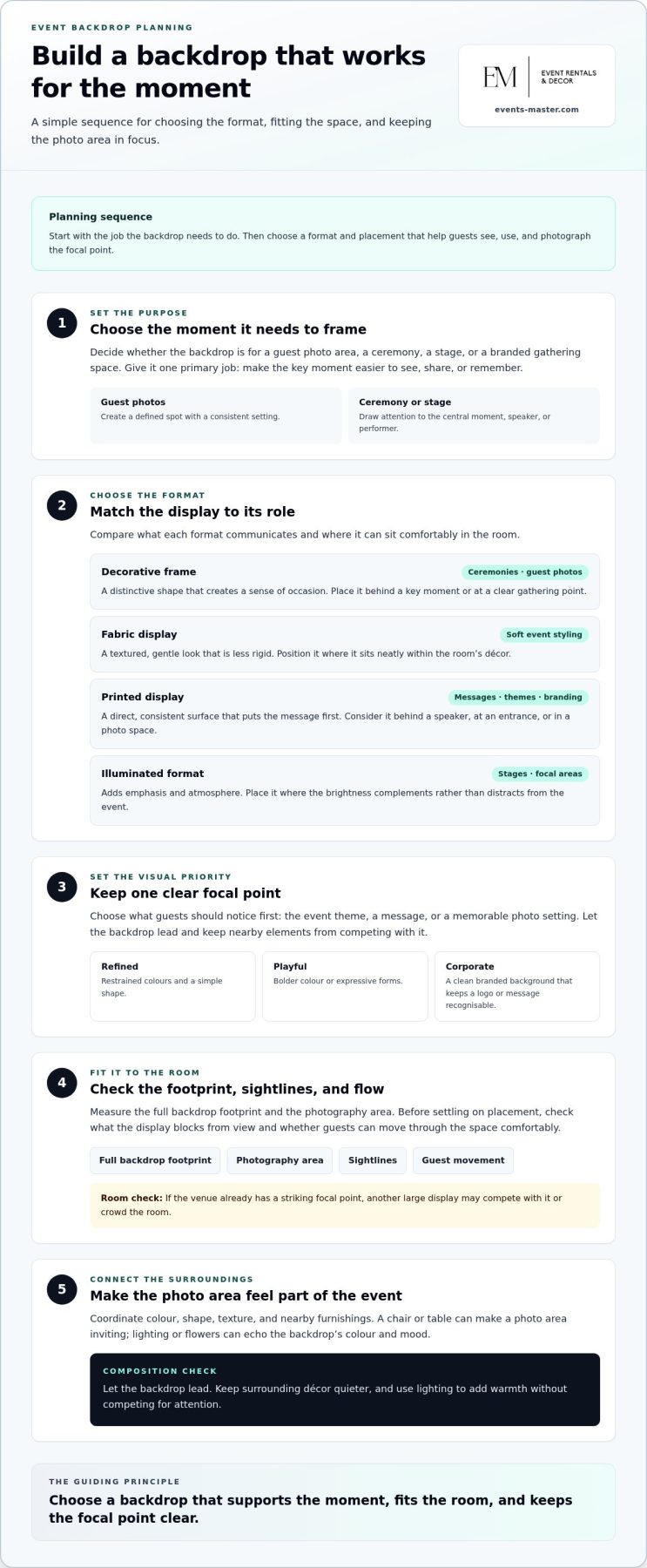
Choose the format that supports the event’s primary visual purpose. Use this comparison to narrow your options:
| Format | Best suited to | Visual character | Placement to consider |
|---|---|---|---|
| Decorative frame | Ceremonies and guest photo areas | Distinctive shape that creates a sense of occasion | Behind a key moment or at a clear gathering point |
| Fabric display | Soft event styling or a simple visual setting | Textured, gentle, and less rigid in appearance | Where it can sit neatly within the room’s décor |
| Printed display | Messages, event themes, or brand visibility | Direct and consistent, with the message as the focus | Behind a speaker, at an entrance, or in a photo space |
| Illuminated format | Stages or focal areas that need added visual emphasis | Noticeable and atmospheric | Where its brightness complements, rather than distracts from, the event |
Decorative backdrops, branded walls, and display formats
Decorative frames work well when their shape helps set the scene, such as framing a ceremony or giving a photo spot a distinct look. Branded displays serve a different purpose: they provide a consistent background for a logo or message in guest photos. Fabric can bring softness, while printed or illuminated formats put more emphasis on a message or visual effect. Choose according to the job the backdrop needs to do, not just its appearance.
Match backdrop style to the event mood
For a refined mood, consider restrained colours and a simple shape. A playful celebration can welcome bolder colour or expressive forms, while a formal occasion may call for a balanced, composed setting. Corporate events often benefit from a clean branded background, especially when a logo or message needs to remain recognisable. A highly decorative feature may distract from that purpose.
Consider colour, shape, texture, and nearby furnishings as one composition. A textured backdrop might pair naturally with softer linen, while a bold display may work best with simpler chairs or tables nearby. Lighting can add warmth without competing for attention. For a gentle glow, fairy lights for a warm event atmosphere can complement the setting. Events Master’s event rental and décor styling can help bring furnishings and styling into a cohesive scene.
Compare event backdrop rental options before you decide
A backdrop can be a temporary decorative feature, a printed message, or a display created for repeated use. The right approach depends on how specific the design needs to be, what happens to it after the event, and how it will fit into the venue. Renting can suit a one-off celebration or function: you have a visual feature for the occasion without needing to store it afterwards. A custom display may be a better fit when a precise message or ongoing use matters.
Compare practical details alongside appearance. Transport and assembly affect how a display fits into the event plan. The event’s duration and the amount of styling required also influence how much visual impact you need. Consider scope when planning the budget: a simple, focused feature has different material and styling needs from a large, detailed focal area. There’s no universal winner. The best choice meets the organiser’s actual needs.
| Consideration | Rental-style decorative feature | Printed or custom display |
|---|---|---|
| Primary purpose | Add atmosphere or shape for a temporary event moment | Show a specific message, identity, or visual design |
| Reuse | Suited to a single occasion or changing event themes | Useful when the same display may serve future events |
| Transport and assembly | Plan how the feature reaches its placement and fits the setup schedule | Consider how the display will be moved, assembled, and stored between uses |
| Visual priority | Let decorative character set the mood | Keep the message clear and easy to recognise |
Rental backdrop or custom display: which approach fits?
Choose a rental approach when the event needs a temporary visual feature and flexibility matters more than keeping the display. This can suit a celebration with a theme that may change next time. Consider a custom display when a precise message or consistent brand presentation is central, particularly if the same artwork will be used again. Compare the time, storage, transport, and styling implications, not just the finished appearance.
For a single evening, a reusable decorative rental can keep the plan focused on the event rather than permanent storage. For recurring functions, a display designed around a lasting message may offer more continuity. In either case, match the scale and finish to the venue and programme.
Evaluate the backdrop as part of the full event setting
Look at the backdrop alongside seating, lighting, and nearby décor. A photo area with a sofa can feel welcoming, while well-placed chairs give guests a comfortable place to pause. Explore how white sofa rental and event seating can help shape that space. Choose nearby pieces that support the focal point; unrelated decorative elements can make the area feel busy rather than considered.
As you map out the setup, Events Master’s event rental and décor styling can help connect the backdrop concept with complementary furnishings and a cohesive overall setting.
Plan backdrop size, placement, and event-day setup
A backdrop can look perfectly sized on its own and still feel cramped once guests, seating, and cameras are in place. Plan the entire area, not just the panel or frame. For an event backdrop rental, map where it will stand, how people will approach it, and where photographs will be taken before you settle on a position.
Measure the backdrop, guest standing area, camera space, and clear routes around them before finalising your layout.
- Measure the space. Record the available width and height, then note nearby furniture, columns, doors, and other features that may limit the backdrop’s footprint.
- Locate the photo or focal area. Choose a position guests can find easily without putting it in the middle of an entrance or busy walkway. Include enough room in front for people to gather.
- Check sightlines. View the location from the guest seating and camera positions. Make sure the backdrop won’t block a stage, a key view, or movement through the room.
- Coordinate nearby décor. Once the layout works, place complementary furniture and lighting without narrowing walkways or crowding the photo frame.
Measure the space and map the photo area
Measure the area available for the backdrop and its full footprint, including any base or frame that extends beyond the visible surface. Then mark where guests will stand and where a photographer can step back to frame the image. A wide display may need more camera distance than a close portrait area, so plan around the shots you want.
Check overhead features, furniture, and structural obstacles as well as floor space. The setup should leave entrances usable, circulation clear, and important sightlines open. A quick sketch can help: mark the backdrop, guest positions, camera area, and nearby seating before finalising the event layout.
Coordinate delivery, setup, and surrounding décor
Build setup time into the venue plan and wider schedule, leaving room to position the backdrop before guests arrive or the area is needed. Keep signs, loose cables, and unrelated décor out of the photo frame and away from guest routes. This helps the feature feel intentional and keeps the surrounding space easy to navigate.
Finish the area with lighting and furniture that suit its role. Party lights can add atmosphere, while a sofa or chairs may make a guest photo spot more inviting. Give each item enough breathing room so the focal area feels complete, not crowded. Events Master can help coordinate complementary event rentals and décor styling as part of your wider setup. Plan your event rental setup with the full layout in mind.
Create a cohesive event setting with Events Master
A backdrop works best when it belongs in the room, rather than feeling like a separate decoration added at the last minute. Events Master brings event equipment rental and décor styling together, helping organisers plan the focal area alongside the furniture, lighting, and linens around it. Choose pieces that support the same mood and purpose instead of collecting unrelated details.
Bring the backdrop together with event rentals
Picture a guest photo area. A sofa or chairs can make it welcoming, while a table may provide a useful nearby surface. Party lights can add atmosphere, and linen covers can connect the furniture to the wider colour scheme. Each item has a role, but the backdrop should remain the visual anchor. Keep the arrangement comfortable and leave enough open space for people to gather and take photos.
Consider the whole scene from a guest’s point of view. Does the seating invite someone to pause? Do the lighting and linen complement the backdrop rather than compete with it? Could a simpler furniture arrangement make the area feel more polished? Décor styling can bring these choices into a consistent setting for private parties and corporate events.
Share a clear brief and take the next step
A useful brief doesn’t need to be complicated. Give the event team the details that will guide the decisions, including:
- Event type: Share whether you’re planning a celebration, ceremony, or corporate function.
- Backdrop purpose: Explain whether it should frame photographs, support a message, or create a focal point.
- Venue layout: Describe the available area, guest movement, seating plan, and any key sightlines.
- Preferred mood: Note the colours, textures, or overall feeling you want the setting to express.
- Surrounding rentals: List the furniture, party lights, and linens you’re considering so they can be styled together.
With those details in hand, décor styling can be shaped around the event vision and practical layout. It also helps connect the event backdrop rental to the rest of the room, from the photo area to the seating nearby. A clear plan gives every choice a purpose and helps the finished setting feel considered.
Ready to bring the details into one plan? Explore Events Master event rental and décor services and start shaping a setting that feels welcoming, polished, and true to your occasion.
Shape a setting guests will remember
Your backdrop can do more than fill a wall. It can give a meaningful moment its own place in the room and help guests feel part of the occasion. Keep the event’s purpose at the centre as you make decisions. Choose an event backdrop rental that suits the people, the space, and the experience you want to create.
Events Master brings event equipment rental and décor styling together, helping you consider how each detail contributes to the setting. The team can help shape a cohesive direction around your event vision.
Ready to turn your ideas into a welcoming event space? Explore event rental and décor services with Events Master and take the next step toward a setting that feels polished, personal, and ready for guests.
Frequently Asked Questions
What should I consider when choosing an event backdrop rental?
Start with what guests need to see and do around the backdrop. Consider whether people will pose individually or in groups, whether a speaker or performer will stand in front of it, and whether any words or logos must stay visible in photos. Also consider how long the area will be in use: a feature for a short presentation has different demands from one guests will visit throughout the gathering.
How do I choose the right backdrop size for my event?
Choose a size that suits the photographs you want, not simply the largest option that fits the wall. For individual portraits, a narrower visual area may be enough; group photos usually need more width so people don’t bunch at the edges. Mock up the intended frame with tape or a simple layout sketch, then check that the design remains visible around the people expected to stand in front.
Can an event backdrop be used for both branding and photographs?
Yes. A branded background can support photography while keeping the event identity visible, provided the design works at camera distance. For example, a clear logo with enough open space can appear in a portrait without overpowering faces. If you use a repeated logo pattern, consider how it will look behind guests of different heights and in both close-up and group shots.
Is a backdrop rental suitable for a small private event?
Yes, a backdrop can suit an intimate gathering if it’s scaled to the room and has a clear purpose, such as giving a family photo a polished setting. A compact feature in a corner may feel more natural than filling an entire wall. Consider how guests will take turns using it, and avoid placing it where a photo queue could interrupt conversation or access to other parts of the venue.
How early should I plan an event backdrop rental?
Start planning once your event date and venue are settled. This gives you time to choose a look, include the backdrop area in the floor plan, and coordinate setup with the rest of the event. If the design needs a specific message or branding, allow time to prepare and review the artwork. Planning early can make later decisions easier.
What is the difference between a decorative backdrop and a step-and-repeat display?
A decorative backdrop is chosen mainly for its appearance and the atmosphere it creates, such as a textured or shaped feature for a celebration. A step-and-repeat display is designed to show a repeated logo or mark behind people posing for photographs, often at a press or corporate event. Choose a decorative approach for mood, or a repeated branding format when consistent brand visibility in photos is the priority.
How can I make an event backdrop look good in photos?
Take a test photo from the spot where guests or the photographer will stand. Check whether the backdrop looks balanced behind a person, whether text can be read, and whether nearby objects enter the frame. Keep the area behind and beside guests tidy, and avoid placing bright décor beside important wording. A quick camera check before guests arrive can reveal small adjustments that make the finished pictures feel more considered.