
Party ideas
Event Furniture: Choosing Pieces for Every Gathering
What if the best-looking event furniture isn’t the best choice for your gathering? Guests need more than attractive pieces: they need comfortable places to sit, surfaces for drinks and meals, and clear routes between activities. The right setup depends on how people will use the space, not just how it looks in a photo.
Start by listing what guests will do, then match furniture to those activities. A seated meal, a standing reception, and a relaxed conversation area each need a different mix. This guide explains the main event furniture categories and how to choose pieces that work together, suit the venue, and make the gathering easier to enjoy.
We’ll look at dining, cocktail, and coffee tables; seating such as chairs, sofas, bean bags, and floor cushions; and how bars, linen, lighting, and décor can complete the setup. You’ll also find practical ways to map gathering zones and review the layout before the event. With a clear plan, you can create a space that looks considered and works for your guests.
Key Takeaways
- Match tables, seating, and serving pieces to what guests will be doing in each part of the gathering.
- Use event furniture to define distinct zones, from dining areas to relaxed conversation spaces.
- Compare furniture options by activity, purpose, and guest needs rather than appearance alone.
- Start your layout with entrances, exits, and fixed venue features, then review how guests will move between zones.
- Bring practical rentals and décor styling together for a coordinated setup with Events Master.
What Is Event Furniture, and What Does It Do for a Gathering?
Event furniture is the movable seating, tables, and supporting pieces used to equip an event space for its planned activities and guests. It gives people places to sit, dine, talk, and gather, while helping divide an open venue into useful zones. A well-planned setup does more than fill a room: it helps guests see where to go and how to use the space.
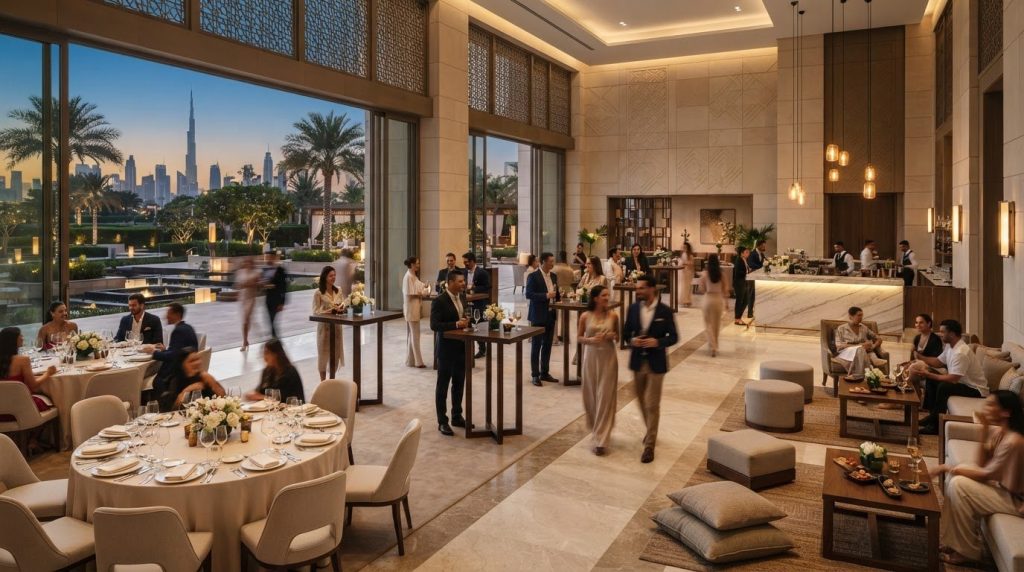
Begin with the activity in each area. Chairs and sofas provide places to sit; dining tables support meals; cocktail tables give guests a surface for drinks and conversation. Coffee tables can anchor a lounge area, while bars can mark a gathering or service point. A formal dinner needs a different arrangement from a relaxed celebration with mingling and casual seating, so choose the mix to fit the event schedule and venue layout.
Then consider appearance. Coordinated table linen, lighting, and décor can bring separate furniture pieces into a cohesive look. Keep those choices practical: guests still need clear paths, reachable surfaces, and seating suited to the way they’ll spend their time. A striking arrangement works best when comfort and function are built into the design.
Which furniture categories appear at events?
Seating can include chairs for dining or presentations, sofas for conversation, and bean bags or floor cushions for a relaxed area. Dining tables give meals a clear home; cocktail tables support standing conversations, while coffee tables suit lounge seating. Bars, linen, lighting, and tents can complement the setup. For a broader overview of furniture forms, see this list of furniture types.
How furniture shapes the guest experience
Comfortable seating encourages guests to settle in and continue conversations. A mix of seating types can make a gathering feel more welcoming and give people options as the event unfolds. Tables give dining, displays, and shared activities a clear place, so guests don’t have to balance items without a surface. Leave enough room for people to approach a table or join a conversation without getting in the way of others.
Coordination ties those practical choices together. Matching linen across dining tables can make a meal area feel intentional, while a sofa and coffee table can signal a quieter place to talk. These zones guide the rhythm of a gathering without making the venue feel divided. Consider the event’s activities, available space, and guest needs together, then choose pieces that look at home and earn their place in the layout.
Event Furniture Categories: Match Each Piece to Its Role
Think about what each area needs, not simply how many pieces can fit. One gathering might combine dining seats, a relaxed lounge, and a standing conversation area. Each zone has a different purpose, so its furniture should suit the activity and help guests understand how to use the space. This purpose-first approach makes it easier to choose a balanced mix instead of crowding the venue with pieces that compete for room.
Tables are a useful place to start. Dining tables support seated meals, while cocktail tables give guests a convenient surface during standing conversations. Coffee tables work alongside lounge seating, creating a shared spot for refreshments or personal items. Decide what each table will be used for and where it belongs before settling on the overall arrangement. For a closer look at formats and styling considerations, explore this event folding table guide.
Seating and lounge furniture for different moods
Chairs suit structured settings such as a seated meal or presentation, where guests need individual places. Sofas can make a conversation area feel more relaxed, while bean bags and floor cushions offer informal seating when that atmosphere fits the event. Mixing seating types can give different parts of the venue their own character. For ideas focused on arranging lounge pieces, see this white sofa rental guide.
Tables, bars, and supporting rental pieces
Choose tables according to the activity: dining tables establish meal settings, cocktail tables suit mingling, and coffee tables complement sofas and other lounge seating. A bar can act as a practical gathering or service point, giving guests a clear place to approach without implying that the furniture itself includes beverage service. For more setup ideas, this cocktail table setup guide explores how these tables can fit into an event layout.
Some pieces support the experience without replacing its core furniture. Linen can bring tables into a coordinated look, lighting can contribute to the atmosphere, and tents can help define an event setting. Treat these as complementary elements: they shape the environment, while seats and tables give guests places to gather and take part.
Before finalising your selection, picture the event from a guest’s point of view. Where will someone sit for dinner? Where can they pause to talk? Which areas need a shared surface? These questions help you assign pieces to zones and avoid filling the venue without a clear purpose. Events Master brings event furniture rentals and décor styling together to support a cohesive plan. Explore event furniture rental and styling as you shape the setup.
How to Compare Event Furniture for Comfort, Style, and Function
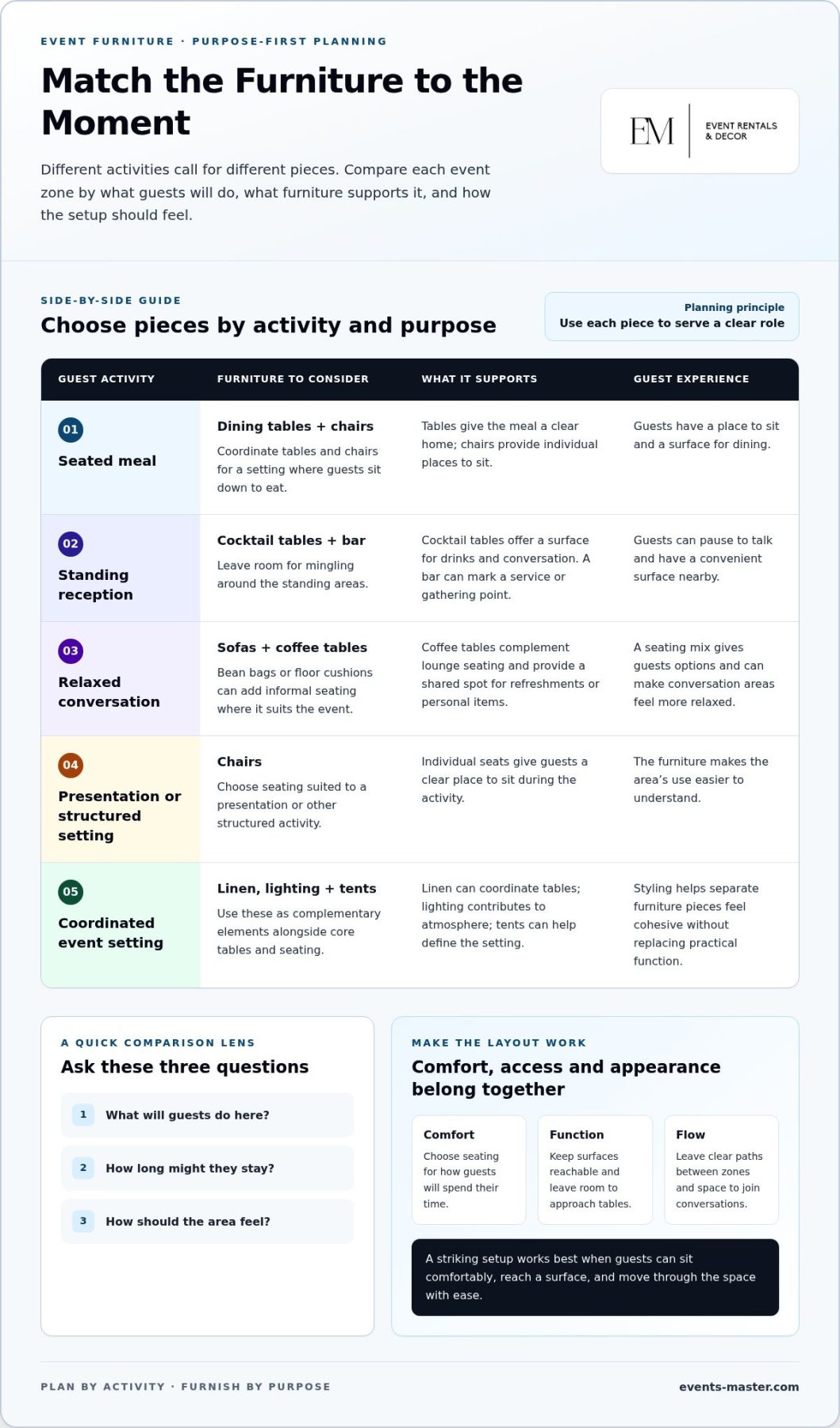
A visually striking setup can still fall short if guests have nowhere comfortable to sit, tables don’t suit the activity, or the layout makes it awkward to move between areas. Compare each piece by asking three questions: What will guests do here? How long might they stay? How should the area feel? The answers help you balance appearance with practical use.
Let the event’s activities and layout guide your choices. Seated dining calls for coordinated tables and chairs. A reception may need cocktail tables and a bar alongside room to mingle. An informal gathering can benefit from lounge seating arranged for conversation. Use the guide below to compare furniture by purpose and guest use.
| Event activity | Furniture role | Selection consideration |
|---|---|---|
| Seated dining | Tables and chairs create a place for guests to eat together. | Consider the meal format, seating arrangement, and how guests will reach their places. |
| Reception or mingling | Cocktail tables and a bar can give guests clear points to gather around. | Leave room for conversation and movement between gathering points. |
| Relaxed conversation | Sofas, bean bags, or floor cushions create an informal seating area. | Think about how long guests may stay and whether the seating suits the event’s tone. |
| Outdoor gathering | Furniture defines seating and social areas; tents can help shape the setting. | Consider the venue’s conditions and how fabric elements fit the overall plan. |
Choose pieces around the event format
For a banquet or other seated meal, begin with tables and chairs as a group, then consider whether their arrangement supports the way guests will dine. At a reception, cocktail tables and a bar can create useful stopping points while leaving space for people to circulate. For an informal gathering, sofas, bean bags, or floor cushions can establish a more casual mood. Let the event format, rather than a preferred furniture style, lead the choices.
Balance comfort, appearance, and practical use
Think about how long guests may spend in each area. A brief stop for conversation calls for a different seating plan than a long meal. Compare shapes, colours, and materials with the event’s wider styling. Coordinated choices can create a cohesive look, while contrast can help distinguish zones. The aim is an inviting setup where each piece still serves its purpose.
Venue conditions matter, too. For an outdoor event, consider the setting when planning furniture, tents, and fabric elements, including exposure to sun or changing weather. Check that the chosen pieces make sense for the space and planned activities rather than relying on appearance alone. A useful final test is to picture a guest arriving, finding a place, and moving through the event. If each step feels natural, the plan is coming together.
Plan an Event Furniture Layout That Helps Guests Move Easily
A comfortable layout starts on paper, before chairs and tables arrive. A simple venue plan helps you see how event furniture will fit, where guests are likely to pause, and which routes should stay clear. Clear routes help guests move between event zones and make the layout easier to use.
Use this planning sequence to turn the venue into a practical setup:
- Sketch the venue. Mark entrances, exits, fixed features, and any areas that can’t be used. Follow the venue’s requirements as you plan the arrangement.
- List the activities. Note what guests will do, such as arriving, dining, talking, or taking part in planned activities. Include any program changes that may affect how the space is used.
- Map the zones. Mark a welcome area, dining space, conversation zone, and any planned service area. Keep entrances and natural movement routes in view as you decide where each zone belongs.
- Place the main pieces. Add tables and chairs where they support dining, then position lounge seating or cocktail tables for conversation. Place bars or other service points where guests can reach them without blocking a route.
- Review the plan. Trace how guests might move from arrival to each activity, and adjust placements that create awkward crossings or crowding. Check the final arrangement against the venue plan and event schedule.
Map activities into distinct event zones
Give each area a clear purpose. A welcome point near the entrance can orient arriving guests, while dining tables can sit apart from a quieter conversation zone. Place furniture to suit the way people will use each space, not just to fill empty corners. Keep transitions between zones easy to follow, and avoid placing a popular gathering point where it interrupts the main route.
Review quantities, cohesion, and setup needs
Estimate the furniture needed from the event format and activities. A seated meal calls for planned dining places, while a reception may need more standing conversation points and flexible seating. Look at the whole room, too. Coordinated chairs, tables, linen, and décor can help the zones feel connected even when each has a different purpose.
Before the event, compare the layout with the venue’s fixed features and the timing of the program. Consider whether furniture will need to shift as activities change, and account for those transitions in the plan. A careful walkthrough on paper can catch issues before setup begins. For support bringing a functional layout and coordinated styling together, plan your event furniture rental and styling.
Bring Your Event Furniture Plan Together with Events Master
You’ve considered the event’s activities, the venue, and how guests will use each area. The next step is to bring those choices into one clear plan. Events Master provides event equipment rental and décor styling, combining practical furniture and equipment with coordinated decorative details for private parties and corporate functions.
Coordinate furniture and styling around one event plan
Start with the purpose of each zone, then choose pieces and styling details that feel connected across the venue. Dining tables and chairs can anchor a meal area; sofas, coffee tables, or floor cushions can give a lounge zone a different mood. Bars can mark a gathering point, while coordinated linen and décor help link the spaces visually. The aim is a setup where each piece has a role and the overall look feels intentional.
The venue and planned activities guide the selection. A private celebration may call for a relaxed place to gather alongside dining space, while a corporate function may need clearly defined areas for different parts of its program. Sharing the event format and venue plan helps shape the furniture mix around how the space will be used, rather than choosing pieces in isolation.
Take the next step with a clear furniture brief
A concise brief makes planning more straightforward. Gather the details that will guide your choices:
- Event format: Describe the kind of gathering and its main activities.
- Venue plan: Note the entrances, exits, fixed features, and areas available for setup.
- Guest experience: Outline where guests will dine, talk, relax, or gather.
- Preferred look: Share the atmosphere you want and any linen or décor direction you have in mind.
With those details in hand, consider tables, chairs, sofas, bars, floor cushions, and linen as parts of one coordinated setup. This is especially useful if your plan includes several zones or shifts from one activity to another. Events Master’s rental and styling services connect the practical furniture plan with the visual details, helping the space feel both welcoming and purposeful.
Ready to shape your gathering around a considered layout? Explore event furniture and styling for your event.
Shape a Gathering Guests Will Remember
Before choosing your final pieces, picture one moment you want guests to remember: a warm welcome as they arrive, an easy conversation that carries on, or a room that feels special as everyone gathers. Let that moment guide your last design decisions. It gives your event furniture plan a personal direction, so the room feels suited to your occasion rather than simply filled with furniture.
Keep your brief simple and clear. Note the atmosphere you hope to create, the activities that matter most, and the details that will help the setup feel true to your event. You don’t need every choice settled before planning begins. A thoughtful starting point can bring the practical plan and creative possibilities into focus.
Ready to create a welcoming setting for your gathering? Explore event furniture and styling with Events Master.
Frequently Asked Questions
What is included in event furniture?
Event furniture commonly includes seating and tables, with supporting pieces chosen for the gathering. A setup might combine chairs and dining tables with sofas, cocktail tables, or floor cushions. Bars can serve as gathering points, while table linen, party lights, and tents help shape the wider setting. Catering equipment may also be part of an event rental plan, though it’s separate from furniture itself.
How do I choose event furniture for different types of events?
Choose based on the event schedule and how guests will participate. A formal meal needs planned places to sit and dine, while a networking reception benefits from spots where people can pause without interrupting conversation. For a family celebration with mixed activities, consider whether guests need a quieter place to talk as well as a central area for shared moments. Let the agenda guide the mix.
Can event furniture be used outdoors?
Yes, event furniture can be part of an outdoor setup, and tents can help define the gathering space. Plan around the actual venue conditions: consider the ground surface, exposure to sun or wind, and whether the event may continue in changing weather. Follow the venue’s requirements for outdoor arrangements, and consider how fabric elements such as linen will suit the setting.
How can I make event furniture comfortable for guests?
Think beyond the number of seats. Consider how long guests will spend in each area, whether they’ll be eating or chatting, and whether the seating suits those activities. A mix of chairs and more relaxed seating can give guests options during a long celebration. Keep tables within easy reach of the seats they serve, and avoid arranging pieces in ways that make settling in feel awkward.
How do I make different event furniture styles look cohesive?
Choose a simple visual direction before selecting individual pieces. A limited palette of colours can connect different furniture styles, while repeating one detail, such as a linen colour or décor accent, helps the room feel considered. Different pieces don’t have to match exactly. Give each zone a shared visual cue and limit competing focal points so the overall space feels welcoming rather than cluttered.
Should I rent or buy furniture for a one-time event?
For a one-time event, renting can be a practical choice because it provides pieces for the occasion without leaving you to store furniture afterward. Buying may suit items you expect to use repeatedly and have room to keep. Compare the full needs of the event, including seating, tables, and styling, then choose the approach that best fits your plans and how you’ll use the pieces later.