
Party ideas
How to Set Up High Tables for a Comfortable, Flowing Event
A high table works best where guests can pause and talk without blocking their way through the room. It’s easy to focus on how many tables a space can hold, but a crowded layout or too little seating can make mingling feel like hard work. A thoughtful setup gives guests room to move, gather, and take a break when they need one.
Start by matching tables to the event activities, then map clear routes between busy spots such as the entrance, bar, and food stations. This guide covers placement, spacing, comfort, and simple styling, along with situations where standard-height tables or nearby seating can offer a welcome change. The aim is a sociable room that feels comfortable and easy to navigate.
Key Takeaways
- Choose a high table for lively, standing conversations, and pair it with dining-height or lounge seating when guests need a more relaxed option.
- Sketch the room’s doors, service access, activity zones, and fixed obstacles before deciding where tables should go.
- Mix standing space and seating to suit the event’s activities, guest comfort, and available floor area.
- Keep décor scaled and tabletops clear enough for guests to chat and set down their belongings.
- Before arranging rentals, confirm table type, quantity, dimensions, accessories, delivery, collection, and current availability.
What Is a High Table, and When Does It Work Well at an Event?
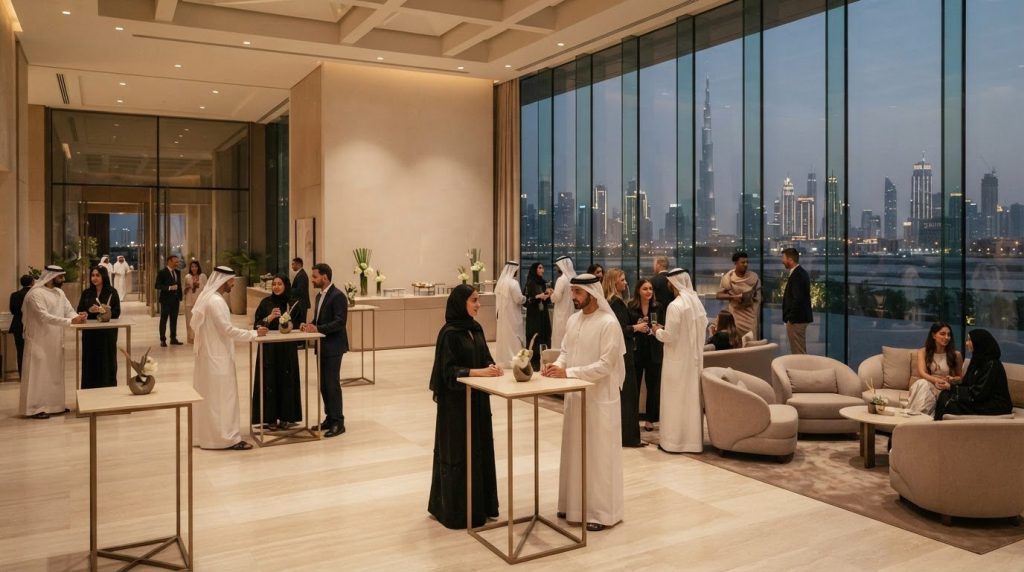
A high table is a raised surface for standing conversations and casual gatherings. Like any table, it gives guests somewhere to set down a drink or personal item, but its height tends to encourage shorter stops rather than a long meal. A high table creates a convenient pause point for mingling, helping guests connect without turning a social area into a seated dining space.
That role sets it apart from other event furniture. Dining tables support seated meals and longer conversations, while low lounge tables work alongside sofas or chairs for relaxed chats. A standing-height surface suits occasions when guests are moving between activities, but it shouldn’t be the only option if the event includes extended dining or calls for rest breaks.
Which event moments benefit from high tables?
Consider the rhythm of the gathering. During arrivals, guests can stop to greet one another and set down a drink before moving further into the room. At a networking break, small groups can gather and disperse around a shared surface. An informal social area can also benefit from tables that provide a natural meeting point without requiring a formal seating plan.
Use these as mingling spots, not substitutes for dedicated dining or presentation areas. Keep casual conversation furniture separate from a seated meal, for example, and avoid placing tables where they interrupt the view or movement around a presentation. The goal is to make it easy to pause, chat, and continue through the event.
Are high tables right for every guest and activity?
No single furniture choice suits every guest. Standing for long periods may be uncomfortable for older guests, people with mobility needs, children, or anyone who prefers to sit. At a longer event, offer chairs or other appropriate seating nearby so guests can choose what feels comfortable. Keep routes to seats clear, and consider whether standing-height surfaces suit the planned activities.
Match the furniture to the schedule, not just the look you want. A brief reception or networking interval may call for open mingling areas, while a meal or longer programme needs comfortable seating options. Review who’s attending, how long each activity lasts, and where guests are likely to gather before deciding how much standing space to include. If you’re considering rented cocktail tables, confirm the available type and dimensions directly with the supplier so the choice suits your guests and room.
How to Plan a High-Table Layout Step by Step
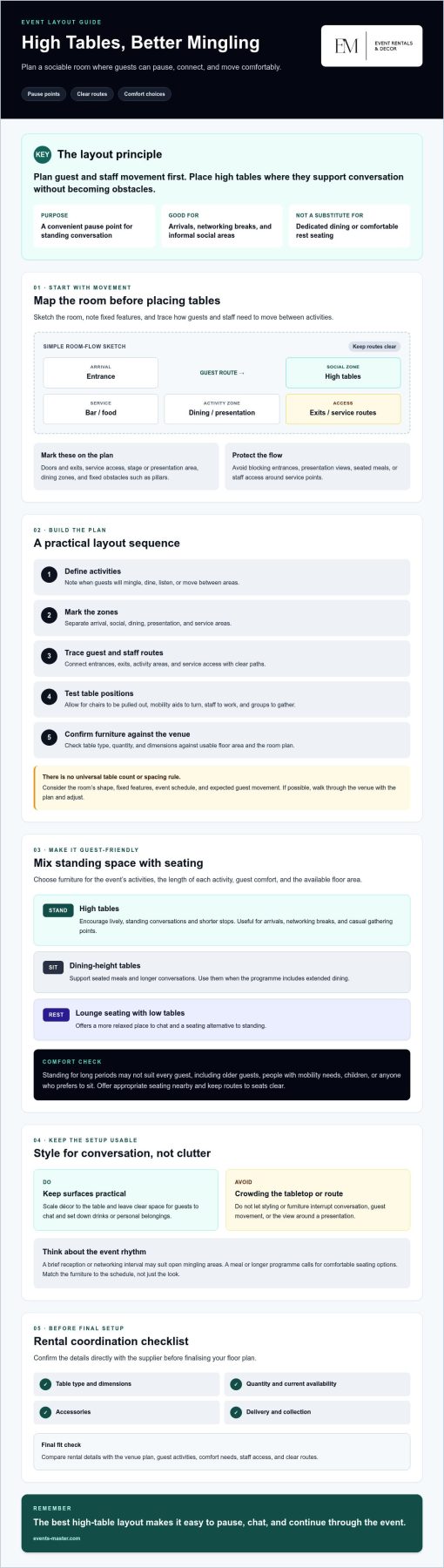
A smooth floor plan starts with movement, not furniture. Before choosing how many cocktail tables to use, consider the event’s activities, zones, guest routes, usable space, and furniture needs. Plan routes for guests and staff first, then place tables where they support the event without becoming obstacles.
Start with the guest journey and event zones
Sketch the room and mark the entrance, exits, service access, stage or presentation area, dining zones, and fixed obstacles such as pillars. Then trace how guests will arrive, gather, eat, listen, and move between activities. BizBash also highlights the value of zoning and traffic patterns in its guide to comfortable layouts.
Use the plan to separate different activities. Put standing conversation areas where guests can pause without interrupting seated meals, blocking a presentation view, or bunching up near an entrance. Keep staff access clear around service points, and ask the venue organiser to confirm requirements for exits and access routes.
Test placement before confirming table quantities
Once you’ve marked zones and routes, test table positions on a simple floor plan. Don’t fill every open patch with furniture. Leave room for chairs to be pulled out, mobility aids to turn, staff to work, and small groups to gather around a surface. A route that looks clear on paper may feel tight once guests are standing and chatting.
There’s no universal table count or spacing rule that works for every venue. Measure the usable floor area and consider the room’s shape, fixed features, event schedule, and expected guest movement. If possible, walk through the venue with the plan and adjust placements to match the space.
- Define activities: Note when guests will mingle, dine, listen, or move between areas.
- Map zones: Mark arrival, social, dining, presentation, and service areas.
- Identify routes: Trace clear paths between entrances, exits, activity areas, and service access.
- Test spacing: Account for furniture, people gathering, and staff movement.
- Confirm furniture: Check table type, quantity, and dimensions against the venue plan.
For a rental setup, Events Master may be one option to explore for event cocktail tables. Confirm suitable options, dimensions, and availability directly before finalising the layout.
High Tables with Seating or Standing Room: Choosing a Guest-Friendly Mix
A comfortable event doesn’t ask every guest to take part in the same way. A high table encourages easy conversation, while chairs, dining tables, or lounge furniture give guests somewhere to rest or settle in. Choose the mix around the programme and attendees rather than relying on a fixed seating ratio or choosing furniture based on appearance alone.
| Layout | Guest comfort | Conversation | Floor-space needs | Best suited to |
|---|---|---|---|---|
| Standing-only | Works best for shorter periods; can be tiring over time | Encourages guests to mingle and move between groups | Generally leaves more room for circulation than a fully seated setup, but groups still need space to gather | Brief receptions or networking intervals |
| Mixed seating | Offers a choice of standing or sitting | Supports both quick chats and longer conversations | Needs room for seats, access, and clear routes | Events with varied activities or longer schedules |
| Activity-specific | Furniture is matched to what guests are doing in each zone | Helps separate casual mingling from focused conversation | Depends on the number and size of distinct activity areas | Programmes combining refreshments, presentations, and seated dining |
When does standing-only high-table placement make sense?
Standing-only areas can suit a short welcome reception or networking break, when guests are expected to circulate rather than stay in one place. The tables provide a convenient surface for a brief pause and create informal meeting points. They’re less suitable as the only arrangement for a lengthy programme or for guests who may need regular opportunities to sit.
Think about older attendees, people with mobility needs, and anyone who may find standing uncomfortable. Where appropriate, include alternative seating or a rest area, and make sure guests can reach it without squeezing through a busy gathering.
How can a mixed layout serve more guests?
Combine standing areas with chairs, dining tables, or lounge furniture to suit the schedule. For example, keep casual conversation near refreshments, place dining furniture in its own zone, and offer seats where guests can pause between activities. A varied setup gives people choices without pushing everyone into one style of socialising.
Place seating where it’s easy to find, but make sure it doesn’t block key routes or crowd gathering areas. The right balance depends on your guests, activities, and usable room space. Treat each furniture type as part of the welcome, not just a way to fill the floor.
How to Style High Tables Without Blocking Conversation or Movement
Good styling feels welcoming, but it shouldn’t make a table harder to use. Guests need space to talk, set down a drink, or keep a personal item close. Keep visual details focused and leave the tabletop useful.
Keep décor attractive but practical
Choose décor that sits low or stays compact, so guests can see one another across the table. A small floral detail or simple linen cover can tie the setup into the event’s visual direction without taking over the surface. Repeat a few colours or materials across nearby furniture for a coordinated look, rather than adding a different feature to every table.
Before setting the final arrangement, consider what guests will need to place on the table. Leave open space for refreshments and belongings, and avoid accessories that compete with conversation or make the surface feel crowded. Use this quick styling check:
- Surface space: Keep enough of the tabletop free for guests to use.
- Décor scale: Choose accents that don’t interrupt sightlines.
- Lighting: Make sure guests can see the table and approach it comfortably.
- Visual cues: Repeat a small set of colours or details to connect the table with the rest of the room.
For an outdoor event, check the venue conditions and ask whether the selected furniture and décor are suitable for the planned location. Wind, uneven ground, and changing light can affect how a setup looks and feels. Confirm practical concerns with the organiser rather than assuming an indoor arrangement will work unchanged.
Make the setup comfortable and easy to navigate
Styling works best when it supports the room, not just the tabletop. Leave clear paths between event areas, and check that décor or lighting doesn’t narrow a route or make table edges difficult to see. If tables sit near refreshments or another busy spot, assess the whole area together so guests can approach, pause, and move on without a pinch point forming.
Before guests arrive, walk through the finished setup from their perspective. Can people see each other easily? Is there room to gather without spilling into a walkway? Can guests find and use the table comfortably? Small adjustments can keep the design attractive while making the space feel more natural.
Planning a coordinated rental setup? Explore event furniture and décor options with Events Master, and confirm suitable cocktail-table availability and details directly.
How to Coordinate High-Table Rentals and Final Event Setup
A thoughtful layout only works if the furniture arriving on the day fits the plan. Before confirming a high table rental, share the event schedule and a simple floor plan with the rental provider. This helps you check the tables alongside chairs, dining tables, bars, linens, and décor instead of treating each item as a separate decision.
What should you confirm before arranging a rental?
Start with the event date, venue details, guest activities, and intended layout. Explain where guests will mingle, dine, or gather, and note any access limitations the venue has shared. Then confirm the available cocktail-table options directly. Don’t assume a particular model, dimension, quantity, or accessory is available.
Use this checklist before finalising the order:
- Table type and quantity: Check that the available tables suit your planned zones and guest activities.
- Dimensions and condition: Confirm the measurements and ask about the condition of the items being supplied.
- Accessories: Check whether suitable linen covers or other required accessories are available, and confirm what is included.
- Delivery and collection: Agree on access arrangements, timing, and who is responsible for setup and collection.
- Venue requirements: Confirm any rules about loading access, placement, or the event schedule with the organiser.
These details matter because a table that suits the floor plan may still be impractical if it can’t pass through the venue’s access route or be positioned at the agreed time. Confirm responsibilities and timing with both the venue organiser and rental provider before the event.
How can furniture and décor work together?
Consider the full guest experience. Cocktail tables can support standing conversations, while chairs, dining tables, sofas, or other lounge furniture offer different ways to gather and rest. Bars and table linens can also contribute to the room’s overall look. Coordinate choices by zone, keeping social areas welcoming and pathways usable.
Events Master provides event furniture rental and décor services for private and corporate functions across the UAE. You can explore Events Master’s event furniture and styling services as part of your planning, then ask directly about suitable cocktail-table options, dimensions, accessories, and current availability for your event.
Bring Your Event Layout Together with Confidence
A welcoming setup is about more than fitting in furniture. Place each high table where it encourages conversation, plan clear routes before filling the room, and offer seating choices that suit your guests and event schedule. Keep styling inviting but practical, with tabletops open for refreshments and personal belongings.
Before confirming rentals, check table type, dimensions, quantity, accessories, and delivery and collection arrangements directly with the provider. Events Master offers event furniture rental and décor services for private and corporate functions across the UAE, which can help you coordinate tables with other furniture and styling details. Ask about current availability and suitability for your event.
Ready to shape a setup that feels comfortable and flows naturally? Ask Events Master about event furniture and styling. With a clear plan and practical details in place, you can create a warm space where guests feel welcome and conversation comes easily.
Frequently Asked Questions
What is a high table used for at an event?
A high table gives guests a standing-height surface for casual conversation, a brief pause, or setting down a drink. It works well in reception and networking areas where people move between groups, rather than as a replacement for dining tables or lounge seating. For a longer event, pair standing areas with comfortable places to sit so guests can choose how they take part.
How many high tables do I need for my event?
There’s no single table count that fits every event. Base the quantity on usable room area, guest activities, likely gathering points, and how much space people need to move around each table. Sketch the layout, mark routes and fixed obstacles, then test potential placements before confirming quantities. A venue walkthrough can help you adjust the plan to the actual space and guest flow.
Do high tables need bar stools?
No, bar stools aren’t essential if the table is intended for standing conversation. Add seating if guests may want to rest or stay in one area longer, but check that any stools suit the table and leave room for people to move around them. You can also provide chairs or a separate lounge area nearby, giving guests a comfortable alternative without crowding the standing space.
How should I arrange high tables for a cocktail-style event?
Place tables in social zones where guests can gather without blocking entrances, service access, exits, or routes between activities. Leave enough room for groups to stand around each table, and avoid clustering furniture at busy points such as refreshments. Use a floor plan to test placements, then walk the venue if possible. Keep dining and presentation areas distinct from casual mingling zones.
Can high tables be used for a formal event?
Yes, high tables can suit a formal event when they support the programme rather than replace its main seating. Use them for a reception area, pre-dinner conversations, or a networking interval, while keeping dining tables for seated meals and suitable chairs for longer sessions. Simple, coordinated linens and restrained décor can help the tables feel polished while leaving the surface useful.
How do I keep high-table areas comfortable for guests?
Offer seating choices, particularly for a long programme or a guest group with varied mobility and comfort needs. Keep routes clear and easy to follow, avoid tabletop décor that blocks sightlines, and make sure lighting helps guests see and approach the tables. Walk through the setup from a guest’s perspective before the event, checking that people can gather, pause, and move on comfortably.
What should I check before renting high tables?
Share your event date, venue details, activities, and a basic layout with the rental provider. Confirm current inventory, table type, dimensions, quantity, condition, and any accessories you need. Also agree on delivery access, setup responsibilities, collection timing, and venue rules. Events Master provides event furniture rental and décor services across the UAE; ask directly about suitable cocktail-table options and current availability for your event.