
Party ideas
Table and Chair Rentals: The Complete Event Planning Checklist for 2026
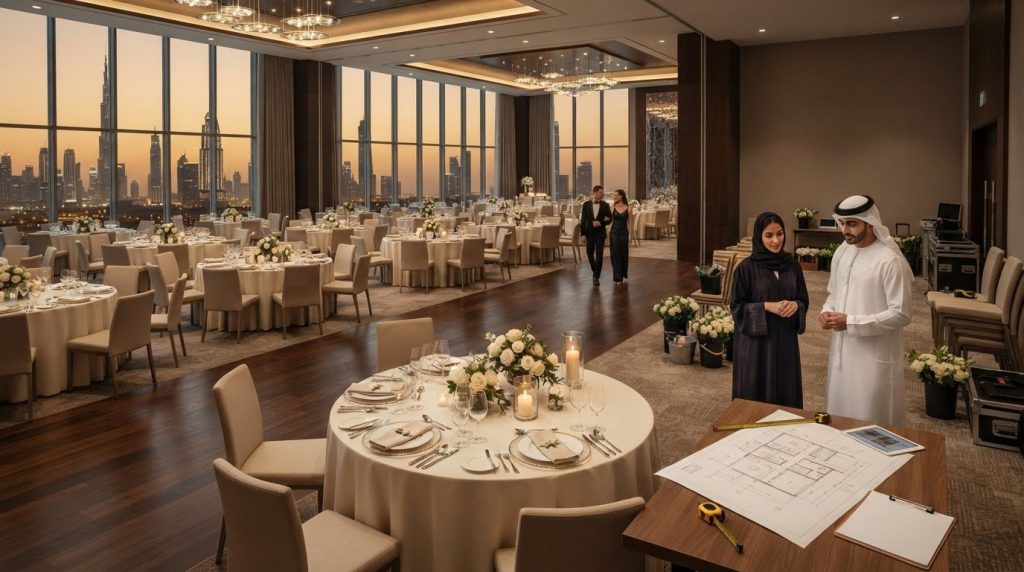
A room can look spacious before the tables arrive, then feel crowded once chairs are pulled out and guests start moving. Smart table and chair rentals begin with more than a head count: the layout needs to suit the room, the meal, and the flow of the celebration.
It’s understandable to wonder how many seats will fit, whether chairs will tuck comfortably beneath the tables, and what needs to happen before guests arrive. This checklist helps you plan those details, avoid ordering too much or too little, and keep event-day logistics on track.
We’ll cover how to measure your space, estimate quantities, check table and chair fit, and coordinate linens and accessories. You’ll also find practical questions to ask about delivery, setup, and teardown before booking. Events Master offers dining and cocktail tables, chairs, linens, party lights, catering equipment, and décor services, so you can coordinate key pieces through one rental and styling provider. Use the steps below to plan for comfortable dining, easy movement, and a warm welcome for every guest.
Key Takeaways
- Map your guest count against usable venue space to plan table quantities and comfortable service aisles.
- Choose table and chair rentals that suit the event’s formality and duration, and check that chair heights work with the tables.
- Measure doorways, corridors, and freight elevators, then confirm loading access and vendor time windows with the venue.
- Match table cloths and linen covers to table dimensions, and choose a drop length that fits the look you want.
- Ask about furniture condition, booking terms, and order adjustments, and consider a small equipment buffer for attendee changes.
Guest Capacity and Spatial Planning: Table and Chair Rentals Sizing Checklist
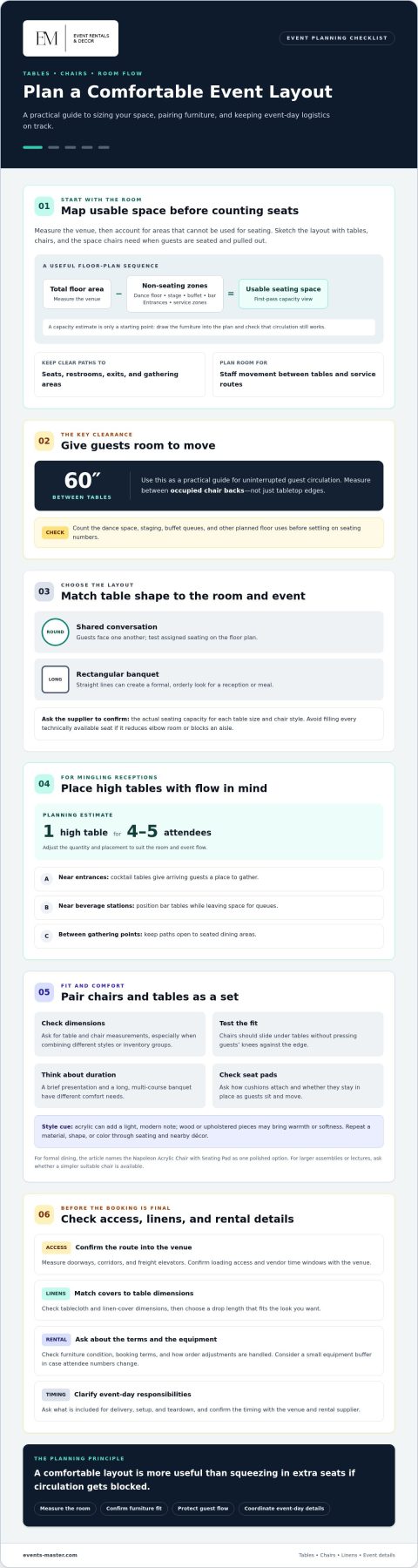
Start with a floor plan, not a guess. Measure the venue’s total floor area, then mark spaces that aren’t available for seating, such as the dance floor, stage, buffet, bar, entrances, and service zones. Subtract those areas from the total to estimate usable seating space. This gives you a first-pass view of capacity, but it doesn’t confirm that a layout will work. Draw in the proposed tables and chairs, including space for chairs when guests are seated and pulled out.
Guests need clear paths to their seats, restrooms, exits, and gathering areas. Staff also need room to move between tables. As a practical planning guide, allow sixty inches between tables for uninterrupted guest circulation. Mark the clearance on your floor plan and measure between occupied chair backs, not just tabletop edges. This helps translate the broader coordination involved in Event management into a workable room plan.
Balance the needs of a seated meal with the room’s social spaces. Count every planned use of the floor, including dance space, staging, and buffet queues, before settling on seating numbers. For table and chair rentals, ask the supplier to confirm the seating capacity of each table you’re considering rather than relying on a generic guest-per-table estimate. A comfortable layout is more useful than squeezing in extra seats if doing so blocks circulation.
Banquet Dining Table Sizing and Guest Ratios
Round dining tables encourage shared conversation because guests face one another. Rectangular banquet tables use the room in straight lines and can create a formal, orderly look for a long reception or meal. For either shape, assign guests to tables and test the arrangement on your floor plan. Don’t fill every seat a table might technically hold if that leaves diners short on elbow room or obstructs an aisle. Confirm the actual seating capacity for the table size and chair style you plan to rent.
Cocktail and High-Top Placement for Flow
Place cocktail tables near entrance areas to give arriving guests somewhere to gather and mingle. Position bar tables near beverage stations, while leaving room for a queue that won’t block the main route. For a standing reception, use a planning estimate of one high table per four to five attendees, then adjust the number and placement to suit the room and event flow. Keep pathways open between these gathering points and any seated dining area.
Furniture Selection Criteria: Pairing Tables and Chairs for Cohesive Styling
A beautiful table setting should still feel comfortable after guests take their seats. Check that chairs slide beneath the dining tables without pressing guests’ knees against the edge, and that diners have room to sit and move naturally. Don’t rely on appearance alone. Ask the rental supplier for the table and chair dimensions, especially when pairing pieces from different styles or inventory groups.
Match seating to the event’s pace. A brief presentation has different comfort needs from a long banquet where guests may remain seated through several courses. Consider the event’s formality, how long guests will sit, and whether the chair cushion or seat pad feels suitable. Keep the choices organized in a planning sheet; Chabot College’s event planning forms offer examples of documents used to coordinate event details.
Formal Dining Seating vs High-Capacity Event Chairs
For a gala or formal banquet, the Napoleon Acrylic Chair with Seating Pad can bring a polished, distinctive look to dining tables. For a large assembly or lecture, a simpler chair may be practical if the supplier carries a suitable option. In either case, ask how cushions or seat pads attach and whether they stay in place as guests sit and move. Check comfort and fit together, rather than treating them as separate decisions.
Style works best when materials feel intentional. Acrylic seating can add a light, modern note, while wooden or upholstered pieces may bring warmth or softness if available from your chosen supplier. Instead of mixing every finish, repeat a material, shape, or color through the seating and nearby décor. Events Master offers dining tables, chairs, and linen covers, making it possible to coordinate these key elements through one rental provider.
Integrating Lounge Seating and Low Furniture
Add a lounge area beyond the dining tables to give guests another way to gather. Pair sofas with coffee tables for relaxed conversation, and consider bean bags or floor cushions for a casual breakout zone. Choose a coffee table that guests can reach comfortably from the surrounding seats without leaning far or crowding one another. Check the whole arrangement, leaving enough room to enter and leave the seating group.
Before confirming your table and chair rentals, review the full mix: dining chairs, table finishes, lounge furniture, and linens should feel like parts of one welcoming setting. Explore event furniture and styling options to see how these elements can be coordinated.
Site Inspection and Logistics Checklist: Delivery, Setup, and Load-In
A furniture plan only works if every piece can reach its place. Before confirming table and chair rentals, walk the route from the venue’s loading area to the event space. Measure doorways, service corridors, and freight elevators, and note narrow turns and low-clearance points. Share those measurements with the rental supplier. Ask whether the tables and chairs you selected can travel through the route as planned or need another access path.
Confirm how to reserve the loading area, when vendors can access the venue, and where vehicles can unload. Ask about setup deadlines, teardown cutoffs, and noise restrictions, especially if furniture must be moved after the event. BizBash’s overview of event furniture and layout designs highlights how setup shapes the guest experience. Your plan also needs to work within the venue’s practical limits.
Venue Access and Architectural Constraints
Check more than the width of a doorway. Measure the full pathway, including turns, thresholds, ramps, and elevator interiors, so stacked chairs and wide tabletops can move safely. Ask the venue whether furniture dollies are suitable for its floors, and confirm whether floor protection is required. Record access restrictions and share the same information with both the venue team and rental supplier.
Build the schedule backward from guest arrival. Include delivery, setup, styling, and a final walk-through, then reserve a two-hour buffer before doors open for unexpected delays or adjustments. Confirm who is responsible for setup and teardown, and document the agreed access window. This prevents the venue, supplier, and planning team from relying on different assumptions.
Outdoor Grounding and Weather Protection
Inspect outdoor surfaces before finalizing the layout. Grass can be soft or uneven, gravel may shift, and stone can have slopes or joints that affect table stability. Test the planned area where possible, and ask the venue or supplier what supports are appropriate for the surface. Don’t assume chair legs will sit securely on turf; discuss suitable protective or load-spreading options before delivery.
If you’re using event tents for shade or shelter, confirm placement, setup timing, and the venue’s weather contingency plan. Agree in advance what happens if conditions change, including whether there’s an alternate sheltered area and who decides to adjust the layout. Keep the final plan clear: where each piece of furniture goes, how it gets there, and when it must be removed.
Linen, Lighting, and Décor Coordination: Transforming Raw Furniture
Linens, lighting, and table décor bring the furniture plan together. Before confirming table and chair rentals, record each table’s shape and dimensions, then choose table cloths or linen covers that fit. Don’t rely on a general size label. A cloth that’s too short can expose an awkward strip of tabletop, while excess fabric may bunch under chairs or catch in guests’ feet.
For a round table, calculate the linen diameter by adding twice the desired drop to the tabletop diameter. For a rectangular table, add twice the intended drop to both the length and width. A lap-length drop gives a lighter, more casual look and keeps fabric clear of the floor. A floor-length drop creates a more formal finish. Measure from the table edge to the floor to estimate the drop, and avoid extra fabric pooling where guests walk.
Linen Sizing and Fabric Selection Protocols
Ask the supplier for the exact tabletop dimensions and the finished dimensions of each linen option. For a round table, compare the linen’s diameter with the tabletop diameter. For a banquet table, check both length and width. High-top cocktail tables may need fitted covers, so confirm that each cover suits the table’s shape and measurements. If the event includes extended or high-volume dining, ask about fabric care and preparation so you can choose an option suited to the occasion.
Make a reference list for each table type with its dimensions, selected linen, and intended drop. This keeps arrangements clear when dining tables, cocktail tables, and table cloths are being coordinated. Events Master offers table cloths and linen covers alongside event furniture, helping planners coordinate the furniture and its finish in one place.
Illumination and Floral Table Styling
For an evening gathering, party lights can frame dining areas with a warm glow. Plan their placement in relation to the tables so the dining zone is lit without glare or blocked sightlines. Keep centerpieces in proportion to the table, allowing diners to see and speak across it. Low arrangements or narrow designs can add color without becoming a visual barrier.
Flower decoration services can add a focal point to a simple linen-covered table. Tie the flowers and decorative accents to the event’s overall palette and mood, then repeat a few details across the room for a cohesive feel. Explore table linens and event styling options to coordinate the finishing touches with your furniture plan.
Vetting Your Rental Partner: Booking Protocol and Quality Checks
A clear agreement makes table and chair rentals easier to manage. Before booking, ask how the supplier checks, cleans, and maintains furniture between events. Find out how it handles condition concerns, and ask what process applies if an item arrives damaged or differs from your order. Get the answers in writing rather than assuming replacements or other remedies are guaranteed.
Review an itemized quote and rental agreement carefully. Confirm which items are included and whether delivery, assembly, placement, and teardown are part of the arrangement or handled separately. Check the agreed arrival timeframe, venue access window, crew responsibilities, and collection schedule. Clear details help you coordinate with the venue and reduce day-of confusion.
Contract Terms, Inspection, and Buffer Management
Use a final checklist to compare the written order with the event plan. If guest numbers may change, ask whether a five to ten percent equipment buffer is suitable for your order and how additions or reductions are handled. On delivery, check the items against your manifest and promptly note anything missing or visibly damaged. Agree beforehand whom to contact and what steps the supplier will take to assess a problem or arrange a replacement, if available.
Confirm practical timing as well: when the crew can enter, how long placement is expected to take, and when furniture must be cleared after the event. These are planning questions, not assumed services. Ask the rental partner to explain its process and document the responsibilities each party has agreed to.
End-to-End Rental Coordination with Events Master
Working with one inventory partner can simplify coordination across furniture and finishing touches. Events Master LLC supplies dining tables, chairs, bars, cocktail tables, sofas, coffee tables, and catering equipment, as well as table cloths and linen covers, party lights, tents, and flower decoration services. Having these categories available through one supplier can help align the practical furniture plan with the overall look.
As you compare providers, look beyond the catalogue. Ask how the items you need can work together, what styling support is available, and which delivery or teardown details you’ll need to arrange. Events Master provides rental equipment and décor for private parties and corporate functions. Review its available event furniture and styling inventory, then confirm the specific items, condition expectations, and logistics for your celebration directly with the team.
Bring Your Event Plan Together
A welcoming event comes together through thoughtful choices: furniture that fits the space and suits the occasion, practical delivery and setup coordination, and linens and décor that feel cohesive. A clear plan helps protect guest comfort while keeping the room functional from arrival through teardown.
With table and chair rentals, coordinating key event pieces through one inventory partner can make planning more connected. Events Master offers tables, chairs, and dining furniture, along with party lights, tents, catering equipment, linen covers, and décor services. This range can help you coordinate practical needs and the overall atmosphere without managing every category separately.
Ready to plan a setup that feels comfortable, polished, and true to your celebration? Explore table and chair rentals with Events Master and review options for bringing your event vision together. Contact the team to discuss the furniture, equipment, and styling your event needs.
Frequently Asked Questions
How far in advance should I reserve table and chair rentals for a large event?
Reserve as early as you can once your date, venue, and estimated guest count are firm. Large events may need a coordinated mix of tables, chairs, linens, and accessories, so early planning gives you more time to check availability and finalize quantities. Ask the rental supplier about booking deadlines, change policies, and when it needs your confirmed order. Don’t assume inventory or delivery timing until those details are agreed.
How do I calculate the right number of tables and chairs for my guest count?
Start with the number of guests who’ll be seated at the same time. Plan one chair per seated guest, then divide the guest count by the confirmed seating capacity of your chosen tables and round up to a whole table. For example, if a supplier confirms a table seats eight, 64 seated guests require eight tables. Adjust for mixed layouts, reserved seats, and guests who’ll be standing or using lounge areas.
What is the standard spacing required between banquet dining tables?
Spacing depends on the room, table arrangement, and how guests and staff need to move through the space. As a practical planning rule, allow 60 inches between tables for uninterrupted circulation, and measure the gap with chairs pulled out rather than judging tabletop edges alone. Treat this as a layout guideline, not a universal venue standard. Confirm the plan with your venue and account for service routes, exits, and queues.
What is the difference between lap-length and floor-length table linen sizing?
Lap-length linens hang partway down from the tabletop, creating a relaxed look while keeping fabric away from guests’ feet. Floor-length linens extend close to the floor for a more formal finish. To estimate the required size, add twice the desired drop to the tabletop diameter for a round table, or to both the length and width for a rectangular table. Confirm the actual table measurements and linen dimensions before ordering.
Can indoor event furniture and dining chairs be set up safely outdoors?
Not automatically. Ask the supplier whether each piece is suitable for outdoor use, and consider the ground, weather exposure, and event duration. Grass, gravel, and uneven surfaces can affect stability, while rain or strong sun may create other concerns. Check that chairs sit steadily and tables remain level on the planned surface. If using a tent for shelter, discuss placement and weather contingencies with the venue and rental supplier beforehand.
What happens if rental furniture is accidentally damaged during our function?
The next steps depend on the rental agreement, so check its damage, loss, and reporting terms before booking. If damage happens, notify the supplier promptly, document the item and its condition with clear notes or photos, and follow the agreed reporting process. Ask in advance how responsibility is assessed and whether any response or replacement options may apply. Don’t assume a replacement is available or that a particular charge or waiver applies.
Does the rental equipment package include on-site setup, placement, and teardown?
Not necessarily. Arrangements vary, so confirm in writing whether delivery, setup, placement, and teardown are included or need to be coordinated separately. Ask about arrival and collection timeframes, venue access requirements, and who is responsible for positioning each item. Review the itemized agreement before confirming. Events Master supplies event furniture, linens, party lights, tents, and catering equipment; ask directly which logistics are included with your specific order.