
Party ideas
Folding Chairs for Events: Comfort, Layout, and Practical Choices
A successful seating plan starts with more than how many people need a seat. Folding chairs can make an event easier to arrange, but comfort, guest movement, and the feel of the room matter just as much. A chair that suits a short ceremony may feel less welcoming during a long dinner, and a crowded layout can make even a well-dressed space difficult to enjoy.
It’s natural to focus on quantity and whether the chairs suit your event style. Practical choices can still feel thoughtful and inviting. This guide explains how to match seating to your event format, estimate chair quantities, and arrange rows or tables with clear access and room to move. You’ll also learn what to consider for comfort and care, and when another seating style may better suit the guest experience. With a little planning, chairs become part of a welcoming layout, not just a place to sit.
Key Takeaways
- Match seating to what guests will be doing and how long they’ll be sitting, not just the event’s look.
- Compare back support, seat shape, stability, and ease of access to judge whether folding chairs will feel comfortable for your guests.
- Choose between flexible seating, statement chairs, and lounge areas based on the atmosphere and activities you want to create.
- Plan the layout around sightlines, entrances, service areas, and clear routes so guests can move through the space comfortably.
- Use a simple sequence, purpose, comfort, style, quantity, and layout, to shape a welcoming event setup with rental furniture.
Folding Chairs for Events: What They Do Well and Where They Fit
Event folding chairs are movable seats designed to fold away for storage and transport, making it easier to adapt a room as an event takes shape. Unlike camping chairs, which are generally intended for individual outdoor leisure, event seating is planned as part of a shared arrangement. The right choice depends not only on portability, but also on the gathering, its duration, guest needs, and how the seating fits the space.
From a ceremony to a presentation, chairs help define where guests sit and where attention is directed. For background on their development and different uses, see History and Uses of Folding Chairs. For event planning, the more useful question is how the seating works for the people in the room.
What makes folding chairs useful at events?
Fold-away seating can simplify setup, storage, and room resets. When an event moves from a presentation to a reception, for example, movable chairs can be cleared or rearranged to open space for the next activity. Some designs can also be stacked when not in use, helping keep storage and setup areas orderly.
The main advantage is flexibility. Organisers can set chairs in rows for a talk, arrange them around tables for a gathering, or keep some aside as overflow seating. Check the specific chair design when planning: not every chair folds, stacks, or moves in the same way.
Which events are a natural fit for folding chairs?
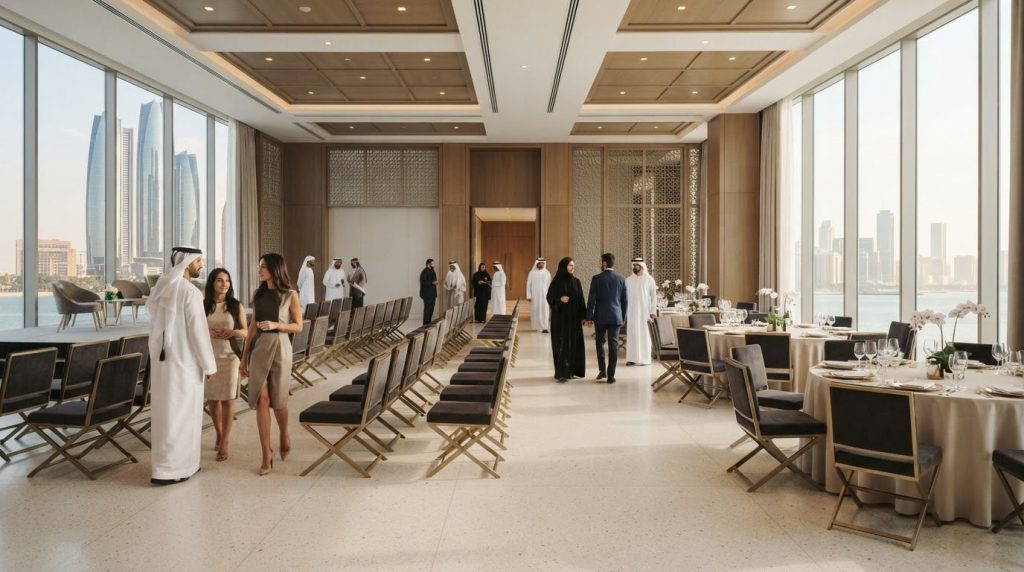
Folding chairs can suit ceremonies, talks, community gatherings, and events where attendance or room use calls for adaptable seating. A consistent arrangement can give a space a tidy, considered feel, while clear rows or groupings help guests understand where to sit.
Practical seating does not have to look plain. For a formal occasion, choose a chair style that supports the overall look. For a longer event, give guest comfort particular attention. A chair that works well for a brief presentation may feel different over an extended programme. Consider the schedule and the people attending, then choose seating that makes the gathering feel welcoming as well as functional.
Folding Chair Comfort: Features That Matter During an Event
Comfort isn’t a label or a single feature. It comes from the whole experience: how the seat feels, whether the back offers useful support, how steady the chair feels on the floor, and whether guests can sit down and stand up without awkwardness. The right choice also depends on what guests will be doing and how long they’ll be seated.
How do you judge comfort for longer events?
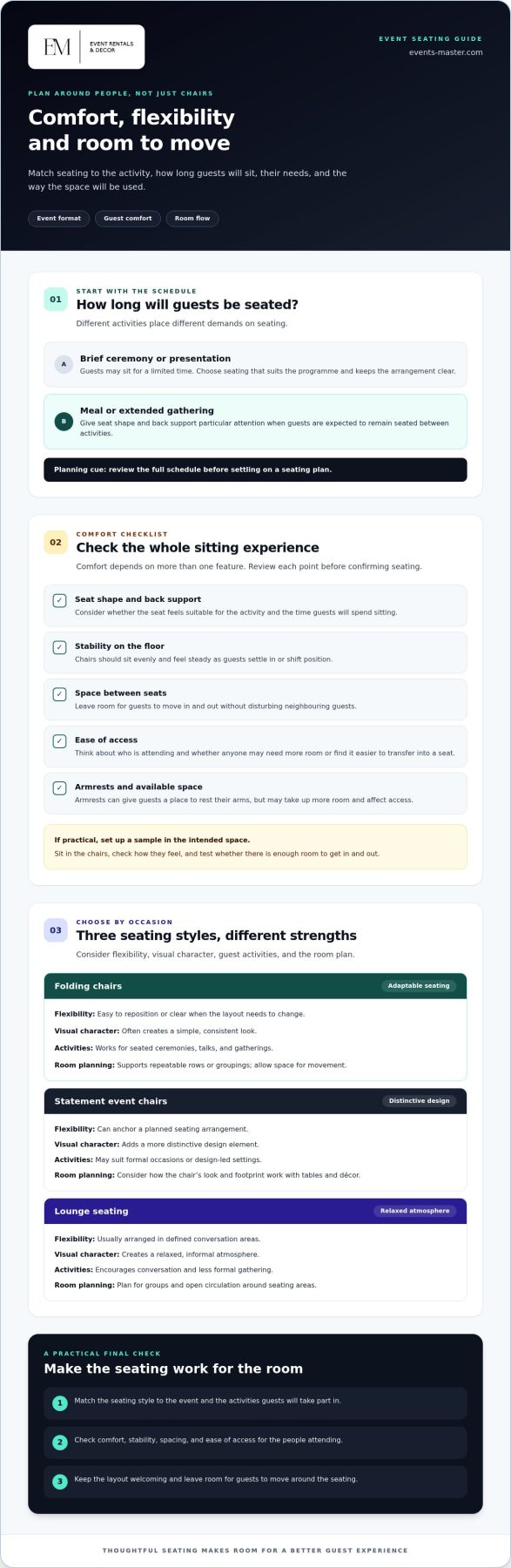
A short ceremony places different demands on seating than a meal, presentation, or extended gathering. For a brief programme, guests may sit for only a limited time. During a longer event, seat shape and back support can matter more, especially when people are expected to remain seated between activities. Review the full schedule before settling on a seating plan.
Stability matters, too. Chairs should sit evenly on the event floor and feel steady as guests settle in or shift position. If practical, set up a sample of the planned seating in the intended space. Sit in the chairs, check how they feel, and see whether there is enough room to move in and out without disturbing neighbouring guests.
Before confirming seating, check seat and back support, stability, space between chairs, and ease of getting in and out. Then consider how long guests will be seated.
Which chair details affect appearance and access?
Shape, colour, and finish influence how seating fits the event’s overall look. A consistent arrangement can feel polished, while a suitable style can complement surrounding tables, linens, and décor. Comfort and appearance can work together; practical seating doesn’t have to feel like an afterthought.
Armrests can provide a place to rest the arms, but they may take up more room between seats and affect how easily guests move into position. Consider the available space and the people attending, including guests who may need more room or find it easier to transfer into a seat. Keep applicable accessibility guidance and venue requirements in mind as you plan the arrangement.
For a coordinated guest experience, consider how the chairs will sit alongside the event’s other furniture and styling. Explore event furniture and styling as part of shaping a welcoming setup.
Folding Chairs vs Other Event Seating: Match the Style to the Occasion
Seating shapes both the guest experience and the way a room works. Folding chairs suit plans that call for adaptable seating, while distinctive event chairs or lounge areas can help create a particular mood. The best fit depends on the occasion, the activities, and how guests will use the space. No single style is right for every event.
| Seating type | Flexibility | Visual character | Guest activities | Room planning |
|---|---|---|---|---|
| Folding chairs | Easy to reposition or clear when the layout needs to change | Often creates a simple, consistent look | Works for seated ceremonies, talks, and gatherings | Supports repeatable rows or groupings; allow space for movement |
| Statement event chairs | Can anchor a planned seating arrangement | Adds a more distinctive design element | May suit formal occasions or design-led settings | Consider how the chair’s look and footprint work with tables and décor |
| Lounge seating | Usually arranged in defined conversation areas | Creates a relaxed, informal atmosphere | Encourages conversation and less formal gathering | Plan for groups and open circulation around seating areas |
When are folding chairs the practical choice?
Choose folding chairs when the seating plan needs a repeatable arrangement or the room may need to be reset during the event. A straightforward profile can keep attention on the ceremony, speaker, or table styling rather than making every seat a focal point. Consistency can also help a large arrangement feel orderly. The chair should still suit the event design and the guests who’ll be sitting in it.
When might a different event chair suit the brief?
A more distinctive chair can contribute to a formal or design-led setting, especially when seating is part of the room’s visual story. The Napoleon Acrylic Chair with Seating Pad is one example of a named event chair style. Consider it as part of a coordinated look, while making sure the overall choice suits the event and its guests.
Tables and chairs work best as a considered combination, rather than separate decisions. For ideas on matching these elements, explore the event folding table guide. A seating style that looks right on its own may need a different arrangement once tables, guest activities, and circulation are factored in.
How to Plan a Folding Chair Layout Without Blocking Event Flow
A well-planned seating layout helps guests find their places without turning entrances, aisles, or activity areas into bottlenecks. Start with the event schedule, not a fixed chair-to-guest ratio. The number and placement of seats should reflect who needs to sit at the same time, what happens in the room, and how people will move between activities.
How many folding chairs should an event plan include?
Begin with the number of guests expected to be seated simultaneously. Total invitations alone may not tell the whole story: people could arrive at different times, move between areas, or take part in activities that don’t require a seat. Then account for the programme, meal format, reserved seating, and any planned room changes.
For example, a ceremony followed by a standing reception may need a different seating plan from a meal where guests sit together throughout. List the moments when seats are needed, identify reserved places, and estimate the number of guests who’ll need seating during each part. This produces a more useful quantity estimate than applying one universal ratio.
How can chair rows and seating zones keep guests moving?
Sketch the room before placing chairs. Mark the entrances, presentation or activity area, dining or service zones, and routes guests will use to move between them. Position the seating so people can find a place without blocking access or interrupting the event. Keep venue requirements and applicable accessibility guidance in view; a layout is not suitable simply because it fits on paper.
- Arrival: Leave a clear way from the entrance into the event space.
- Seating: Arrange rows or groups to suit the activity and preserve sightlines.
- Movement: Keep routes to essential areas clear, including paths between seated and standing zones.
- Transitions: Allow the layout to support changes in the programme without crowding guests.
Before setup, review the proposed arrangement from guest viewpoints. Check whether seated guests can see the activity, whether entrances remain accessible, and whether people can move in and out without squeezing past others. If the event includes both standing and seated areas, coordinate them thoughtfully with cocktail table event layouts.
Explore event furniture rental for ideas to help bring your seating plan together.
Renting Event Chairs: Turn Your Seating Plan into a Welcoming Setup
A thoughtful seating plan brings together the practical and the personal. Start with the event’s purpose, then consider guest comfort, chair style, the number of people likely to sit at once, and how the layout will support the programme. This sequence keeps the focus on the guest experience rather than choosing folding chairs in isolation.
For a one-off or occasional function, rental furniture can help organisers create the setup they need without buying and storing permanent furniture. It also makes it easier to plan the full setting, with seating alongside dining or cocktail tables, standing areas, and décor. The result can feel cohesive and welcoming, whether the occasion is a private celebration or a corporate gathering.
What details help shape an event seating plan?
Before settling on quantities or arrangement, gather a few planning essentials:
- Guest count: Estimate how many people will need a seat at the same time, including any reserved seating.
- Event format: Note whether guests will attend a ceremony, presentation, meal, reception, or a mix of activities.
- Venue plan: Mark entrances, key activity areas, dining zones, and the routes guests need to move through.
- Desired atmosphere: Decide whether the room should feel formal, relaxed, polished, or flexible.
These details influence one another. A seated meal calls for a different arrangement from a reception with a mix of seats and standing space. Tables, folding chairs, décor, and circulation should work together so guests can settle in without the room feeling crowded or disjointed.
How can chair rental support a coordinated event look?
Consistent seating can make a venue feel considered, while complementary furniture and styling help connect each area. Align the folding chairs choice with the table setting and overall atmosphere, then check that the layout leaves comfortable routes between seated and standing spaces. A beautiful arrangement should be easy for guests to use, too.
Events Master LLC provides event furniture rental and décor styling for private and corporate functions, helping organisers shape the wider setup around the occasion. As you finalise your plan, keep the sequence simple: purpose, comfort, style, quantity, then layout. Attention to each step can make the room feel ready to welcome everyone.
Ready to bring your event setup together? Explore event furniture and styling options.
Make Your Seating Plan Work for Every Guest
The right seating choice starts with the event, not the chair alone. Consider how long guests will sit, what they’ll be doing, and how people will move around the room. Folding chairs can be a practical fit for flexible layouts, while a more distinctive option may better support a formal or design-led atmosphere.
Comfort and flow belong in the same plan. Check that the seating suits the occasion, that guests can see and access key areas, and that chairs work alongside tables and décor. Events Master provides event furniture rental and décor styling for private and corporate functions, with options such as the Napoleon Acrylic Chair with Seating Pad to help shape the look and feel of your setup.
With a thoughtful layout and seating chosen for your guests, you’re well on your way to creating an occasion that feels comfortable, considered, and easy to enjoy.
Frequently Asked Questions
Are folding chairs comfortable enough for a full event?
They can be, but comfort depends on the individual chair’s support, stability, and fit for the event’s duration. A short ceremony may call for different seating considerations than a longer meal or presentation, where guests remain seated for more time. Think about who’s attending and what they’ll be doing. If practical, try a sample arrangement to assess the seating experience before planning the full setup.
How many folding chairs do I need for an event?
Plan for how many guests will need to sit at the same time, then adjust for the event schedule, reserved seats, and movement between activities. Invitation count alone may not determine the number of chairs: guests might arrive at different times or move between seated and standing areas. Map the programme first, identify the moments when seating is needed, and estimate the quantity for those parts of the event.
Can folding chairs be used for a formal event?
Yes, they can suit a formal event if their appearance, arrangement, and surrounding décor support the atmosphere you want. A tidy, consistent layout may complement a ceremony, while some occasions call for a more distinctive event chair as part of the design. Consider the room as a whole, including tables and styling, and choose seating that feels appropriate for both the event’s character and its guests.
What is the difference between a folding chair and a camping chair?
Both types can fold, but they’re generally designed and presented for different uses. Camping chairs are often made for individual outdoor leisure and may include features such as armrests. Event seating needs a broader assessment: consider how chairs work together in the layout, guest comfort, appearance, and fit with the occasion. A chair suited to outdoor leisure may not create the consistent arrangement an event calls for.
How should folding chairs be arranged for an event?
Start with the guest count and event activities, then place seats to support clear sightlines and access routes. Keep entrances and movement paths open so guests can find their seats and reach key areas without disrupting the event. Follow the venue’s requirements and sketch the arrangement before setup. Review the plan from seated viewpoints, too, to see whether guests can comfortably view the main activity.
Can folding chairs work with tables and cocktail areas?
Yes. Chairs can be planned alongside dining tables and standing areas when the event includes distinct activity zones. Think about how guests will move between seated meals, conversations, and standing moments, then choose table arrangements that suit the event format. Treat seating, tables, and circulation as one furniture plan rather than separate decisions. This helps the room feel cohesive and gives guests a clear, comfortable way to use each area.
Are folding chairs easy to store and move?
Folding designs are intended to make storage and handling more practical, but ease depends on the individual chair and the setup. Plan where chairs will be kept before and after the event, and consider how they’ll move if the room needs to change between activities. Leave a clear handling route in your setup plan. Avoid assuming every chair folds or stores in the same way; account for the specific seating you’re using.