
Party ideas
Fairy Lights: How to Create a Warm, Welcoming Event Atmosphere
What if a welcoming event needs better-placed light, not more décor? Fairy lights can make a venue feel warm and inviting, but the wrong style or scattered placement can leave the setup looking messy or too dim. The difference comes down to scale, position and the kind of glow you want.
Choosing lights is easier when you start with the occasion and the layout. This guide explains common fairy-light styles, how to match them to an event, and where they can make the most impact without getting in the way.
From soft, romantic accents to a brighter, more modern feel, lighting works best alongside furniture, flowers and other décor. A few considered choices can help guests feel at home from the moment they arrive.
Key Takeaways
- Use fairy lights as ambient or accent lighting, not as the only source of light.
- Choose a style for the effect you want: delicate wire lights, visible-bulb strings and curtain styles each look different.
- Pick a focal point, then use overhead lines, backdrops or edges to guide the eye and shape the space.
- Plan the layout before setup so the lights feel intentional rather than scattered. Adding more isn’t always better.
- Coordinate lighting with furniture, flowers, linen and other décor for a more cohesive look.
What Are Fairy Lights, and Why Do They Change an Event’s Atmosphere?
Fairy lights are small decorative lights arranged along a flexible string or wire. Their individual points of light can trace an edge, frame a backdrop or add a gentle glow above a gathering. They are usually chosen for the atmosphere they create, rather than as a source of practical illumination.
Fairy lights are decorative lights that set a mood or draw attention to a feature, not a replacement for general lighting. Guests still need enough light to move around comfortably, find their seats and enjoy the event. Treat fairy lights as one layer of the plan: they add atmosphere while other lighting supports visibility.
Their effect comes partly from repetition. A line of small lights gives the eye several gentle points to follow, which can make a plain area feel more intimate. A few carefully placed strands may add more charm than covering every surface. The wider history of decorative lighting, including its familiar Christmas associations, is explored in this history of Christmas lights.
How Fairy Lights Create a Softer, More Welcoming Mood
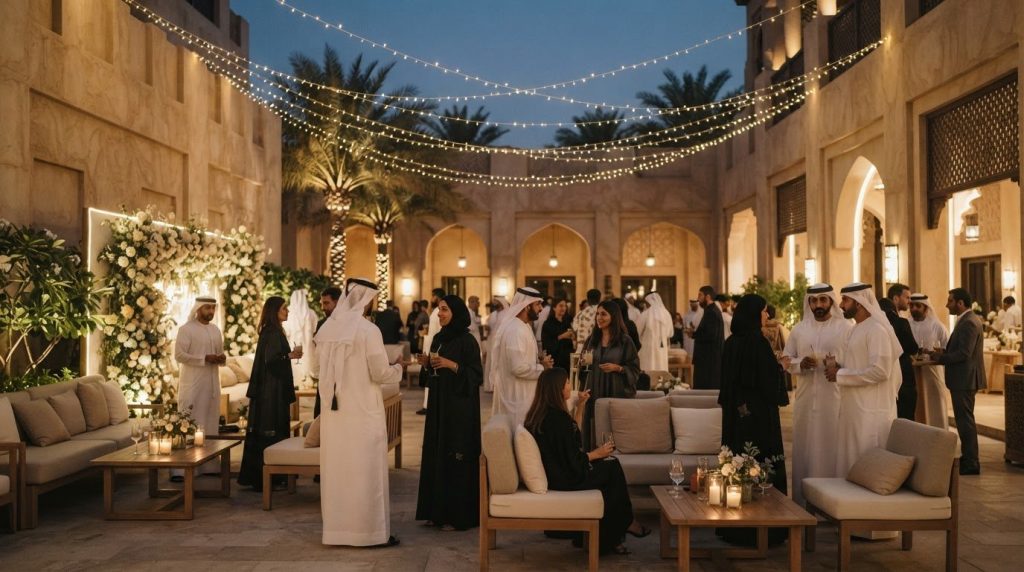
A repeated glow can soften the feel of a room without distracting from flowers, furniture or a table setting. At a family celebration, a strand near the gathering area can make the space feel relaxed. At a reception, lights around a backdrop can give a feature gentle emphasis. The effect depends on placement and the surrounding light. In a bright room, strands may be subtle accents; in a dimmer setting, their glow may be more noticeable.
Picture the guest experience before choosing locations. Where will people sit, mingle or pause for a photograph? A soft glow near those moments can make the setting feel considered and welcoming.
Fairy Lights, String Lights, and Decorative Lighting
In everyday searches and conversations, people may use “fairy lights,” “string lights” and “decorative lighting” interchangeably. The terms can describe lights arranged along a cord, but they don’t guarantee the same shape, spacing, brightness or intended use. Read the description of a specific option instead of assuming the labels mean identical features.
“Fairy lights” often suggests a delicate appearance, with small points of light on a fine-looking string or wire. “String lights” is a broader everyday phrase that may also describe more prominent bulbs. These are visual descriptions, not fixed product names. For event styling, decide what you want guests to notice: a fine twinkle, a defined line overhead or a softly illuminated focal area. That choice helps the lighting feel connected to the occasion instead of added as an afterthought.
Which Fairy-Light Styles and Power Options Suit Different Events?
The right choice depends on the job the lights need to do. A fine strand adds a quiet detail, while visible bulbs or a curtain of lights can make a larger area a stronger visual feature. Consider the venue, event palette and places where guests will gather before settling on a style. Fairy lights should support the look, not compete with it.
Choosing a Light Style for the Mood You Want
Delicate wire lights work well as subtle accents, such as outlining a small display or adding a fine glimmer to a decorative detail. Visible-bulb strings create a bolder line overhead or along an edge, making them more of a feature. Curtain-style arrangements form a broad backdrop, which can draw attention to an area for photographs or speeches.
Light colour affects the mood, too. Warm-looking light often feels relaxed and welcoming; neutral tones can look understated, while coloured light can echo an event palette. Before choosing a strong colour or bright arrangement, consider nearby flowers, linen and furniture. Picture the lights beside the event’s main colours. If they draw attention away from those details, a softer or more restrained choice may work better.
Choosing Between Plug-In and Battery-Powered Lights
Power affects where a style can go. Plug-in lights need suitable access to power, so plan their position around the venue layout and keep cables clear of guest routes. Battery-powered lights can suit a small accent or a spot where a cable would be awkward. Operating time and placement guidance vary by product, so follow the manufacturer’s instructions for setup and use.
A quick comparison:
| Style or power format | Visual effect | May suit |
|---|---|---|
| Delicate wire lights | Fine, understated accents | Small decorative details |
| Visible-bulb strings | A more prominent line of light | Overhead features or defined edges |
| Curtain-style arrangement | A broad, illuminated backdrop | A focal wall or photo area |
| Plug-in format | Placement depends on access to power | Layouts with a suitable nearby power source |
| Battery-powered format | Can avoid a cable across the layout | Smaller accents away from convenient power access |
Choose the visual effect first, then decide which power format works for the planned position. Events Master offers party lights for event styling alongside furniture rentals and decorative touches, helping you bring the different elements of the setup together.
Where Should You Place Fairy Lights for the Best Visual Effect?
Start with the moments and features you want guests to notice, not with the number of surfaces you can decorate. A focal point might be a welcome area, a backdrop or a place where guests gather. Then consider transitions, such as the route from the entrance to the seating area, and spots where people will pause to talk. A few deliberate placements can connect the layout without filling every corner with light.
Placement principle: Match the scale of the lights to the focal point, and keep them clear of important sightlines. This makes the arrangement visible without blocking faces, views across the room or attention from the event’s main feature.
Using Fairy Lights to Define Event Zones
Overhead lines can draw the eye across a gathering area and give it a sense of shape. A backdrop creates a concentrated feature, while lighting along an edge can mark a boundary or transition between spaces. Before deciding where lights go, walk through the guest journey. Consider the view from the entrance, where people might stop, and whether a strand could distract from conversation or interrupt a clear route.
At a reception, a focal area can feel distinct from the places set aside for mingling. In a lounge, a softer edge of light can make the space inviting without separating it from the rest of the event. Check the view from both seated and standing positions, since a placement that looks balanced from one angle may feel busy from another.
Pairing Fairy Lights with Furniture and Décor
Once you have mapped the main positions, consider how the light will sit beside tables, seating, flowers and linen. A gentle line overhead can complement a table setting without adding visual weight to its surface. A backdrop may work best with restrained surrounding décor, so one feature takes focus. If flowers already bring strong colour or detail, a simpler lighting arrangement can keep the overall look calm.
For a lounge or reception layout, leave breathing room around furniture so the lighting supports conversation rather than crowding the seating. Place accents near a gathering point instead of adding unrelated strands across the room. Keep colours and visual density in balance. If several decorative elements compete for attention, simplify the lighting or reduce the number of lit areas.
To plan, mark the focal point on a simple venue sketch, then note transitions and gathering spots. Add possible overhead, backdrop or edge placements and imagine the view from the entrance, seats and main walking routes. This makes gaps or clutter easier to spot before setup. Fairy lights are most effective when each placement has a purpose and works with the seating and décor, creating a warm welcome without taking over the scene.
How Can You Plan Fairy Lights Without Clutter or Setup Surprises?
A welcoming lighting plan starts with intention, not quantity. Adding more strands doesn’t automatically create a better atmosphere; too many competing lines can distract from the event and make the layout feel busy. Decide what guests should notice, then give each placement a clear purpose. Planning ahead also helps prevent awkward cables, blocked routes and last-minute changes.
A Simple Planning Sequence for Decorative Lighting
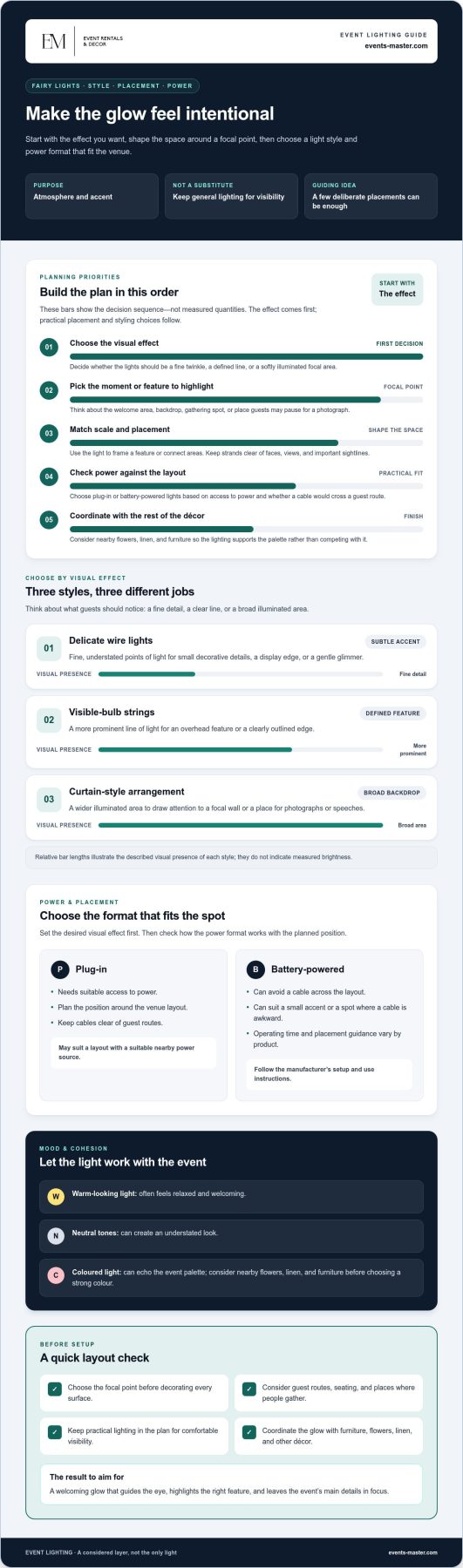
Use this order to turn an idea into a practical plan:
- Choose the mood and focal point. Decide whether the setting should feel relaxed, celebratory or refined, then identify one feature to highlight, such as a backdrop, welcome area or gathering space.
- Map the layout. Mark the focal point, furniture positions and guest routes on a simple sketch. Note possible light runs and where people will sit, stand or move between areas.
- Select a style and power format. Choose an arrangement for the planned position, then consider whether nearby power access works or a battery-powered format would avoid an inconvenient cable.
- Review the setup. Look at the plan from the entrance and from seating areas. Check that the lighting supports the focal point without crowding the view or interrupting movement.
This sequence connects the visual idea to the practical details. If a backdrop is the main feature, for example, plan its position in relation to nearby seating before choosing a lighting arrangement. That helps the feature feel connected to the room instead of added at the end.
Keeping the Result Balanced and Practical
Keep the plan considered. A few deliberate lighting features can make a stronger impression than decorating every surface. If you have planned a focal area and a transition point, pause before adding more. Ask whether another strand will improve the atmosphere or draw attention away from flowers, table settings or conversation.
Practical details matter as much as appearance. With plug-in lighting, plan for access to power and consider where cables will sit in relation to furniture and guest movement. Avoid routes where a cable could become an obstruction. For any arrangement, follow the product instructions and use it only in settings where it is stated as suitable. For outdoor use, check the product guidance instead of assuming indoor decorative lights are appropriate outside.
Before the event, review the whole layout: focal point, furniture, guest routes and lighting positions. Adjust anything that feels crowded or awkward, and keep the plan simple enough to set up consistently. For a coordinated event look, explore party lights for your event alongside furniture and décor choices.
How Do Fairy Lights Fit into a Complete Event Styling Plan?
Lighting works best as part of the event’s full visual story. Fairy lights can support a relaxed mood or draw attention to a chosen feature, but their impact depends on how they fit with the layout, furniture and decorative details. Start with the feeling you want guests to have, then connect the lighting to the setting instead of treating it as a finishing touch added in isolation.
Coordinating Lighting with the Wider Event Look
Consider the event palette before settling on light colour or placement. A soft, warm glow can complement natural flowers and gentle tones, while a defined line of light may suit a sharper, contemporary look. The goal isn’t to match every detail exactly. Make sure the lighting doesn’t clash with colours and textures already doing important work.
Furniture gives those choices context. A lounge arranged around sofas and chairs may call for lighting that makes the area feel welcoming. A dining setup with considered linen and floral décor might benefit from a lighter touch that leaves the table as the focus. For a private celebration, the aim may be an intimate, personal feel. A corporate gathering may call for a polished atmosphere that supports conversation and keeps key areas visually clear. In either case, the lighting should suit how guests will use the space.
Look at the room as a guest would: notice the view on arrival, the main gathering areas and how the focal feature appears beside surrounding décor. If flowers, furniture and lighting all compete for attention, simplify one element. A cohesive event doesn’t require every detail to stand out at once.
Turning a Lighting Idea into a Welcoming Setup
Bring the plan together by pairing the mood, focal point and guest layout. Decide which feature should lead, then coordinate the lighting with nearby furniture, flowers, tablecloths and linen covers. Consider how the room will feel from different viewpoints, including where guests will sit and gather. This helps each choice serve the occasion while keeping the overall look comfortable and easy to enjoy.
- Set the mood: Choose a look that fits the celebration or corporate event.
- Build around the focal point: Let lighting support, rather than overpower, the feature guests should notice.
- Coordinate the details: Connect lighting with furniture, flowers and linen for a more considered setting.
Events Master brings party lights together with event equipment rentals and décor styling to help shape a connected setting, from the first impression to the gathering spaces. Explore event rental and décor options for ideas to bring your event look together.
Give Your Event a Glow That Feels Like You
Think about the atmosphere you want guests to remember: a calm, intimate welcome, a lively celebration or a polished setting for conversation. Let that feeling guide your styling choices. Fairy lights can help express the mood, while furniture, flowers and finishing touches make the space feel personal and complete.
You don’t need to fill every corner to make an impression. Choose a clear focal point, keep the layout comfortable for guests and let each decorative detail work together. A considered plan can make the setup memorable without making it feel overdone.
Events Master brings event equipment rental and décor styling together for private parties and corporate events. Explore event rental and décor options to plan a coordinated setting for your gathering.
With a thoughtful plan, you can create a celebration that feels warm, beautiful and truly welcoming.
Frequently Asked Questions
Are fairy lights and string lights the same thing?
Not always, though people often use the terms interchangeably. “Fairy lights” usually describes small, delicate-looking lights on a flexible wire or string, while “string lights” can refer to a wider range of designs, including larger visible bulbs. The label alone doesn’t tell you how a set operates or where it’s suitable. Check the product description for its size, power source and intended use before choosing it for your event.
Can fairy lights be left on overnight?
It’s safest to switch decorative lights off before sleeping or leaving them unattended, unless the product instructions specifically provide guidance for that situation. Before use, check the wire and connections for visible damage, and keep lights away from anything that could press against or cover them. If a set feels unusually hot, flickers or behaves unexpectedly, turn it off and follow the manufacturer’s instructions rather than continuing to use it.
How do you hang fairy lights without damaging a wall?
Use removable adhesive hooks or clips suitable for the wall surface and the weight of the lights. Follow the adhesive product’s instructions and test a discreet spot first, since paint and finishes can respond differently. Avoid nails and staples, which can damage the light wire. Plan where the strand will end before attaching anything, so you can keep it away from doorways and avoid pulling the wire tight.
Can you connect multiple fairy-light strings together?
Only connect strings if the product is designed for that purpose. Follow the manufacturer’s instructions on whether sets can be joined and the maximum number permitted. Don’t assume that matching plugs or appearance means two sets are compatible. If the lights aren’t designed to connect, use them as separate sets with suitable power access, and avoid overloading an outlet or extension lead.
Do LED fairy lights use a lot of electricity?
LED lights generally use less electricity than comparable incandescent lights, but actual consumption depends on the set’s wattage and how long it stays on. Check the product label or instructions for its power information. A short display switched on for part of an evening will use less energy than the same set running for many hours. A timer, if provided and used as instructed, can help limit operating time.
How many fairy lights do you need for a small event space?
There isn’t one ideal number because room shape, strand length and the feature you want to highlight all matter. Measure the intended run, such as a backdrop width or one defined edge, then compare it with the length stated on the light set. For a compact gathering area, begin with one planned feature and assess the effect before adding another. This helps avoid setting up more than the layout needs.
Can fairy lights be used outdoors?
Yes, if the specific set is marked as suitable for outdoor use and is used according to its instructions. An indoor-use label isn’t enough for an exposed outdoor setting. Check guidance for the lights and power supply, including how connections should be protected, and avoid using damaged or wet equipment. Outdoor conditions can change, so follow the manufacturer’s directions for placement and weather exposure rather than relying on appearance alone.