
Party ideas
Ramadan Decorations: Ideas for a Warm, Welcoming Gathering
What if the most welcoming Ramadan decorations are the ones that leave plenty of room for guests? A warm gathering doesn’t need every surface filled with lanterns, crescent moons, and sparkling lights. Thoughtful choices can bring a festive feel while keeping your home or event comfortable and easy to move around.
It’s understandable to wonder how traditional details can sit alongside a more contemporary look, or how to coordinate the lighting, seating, and dining area without making a small space feel crowded. The good news is that a clear palette and a few well-placed accents can do a lot. You can create an inviting atmosphere that feels personal, calm, and ready for shared moments.
In this guide, you’ll find practical ways to choose a cohesive colour scheme, use decorative details with intention, and arrange lighting, dining, and seating around your guests. We’ll also explore how rented furniture, party lights, table linen, floor cushions, and flower decoration services can help bring a coordinated Ramadan gathering together across the UAE, without taking over the space.
Key Takeaways
- Use ramadan decorations to express hospitality and reflection, rather than filling every surface.
- Build a cohesive look by choosing a mood and palette first, then repeating a few colours or materials.
- Match focal details, lighting, seating, and table needs to the space, whether it’s a home corner, dining area, or larger venue.
- Plan the layout around guest access, comfortable seating, and clear movement before adding finishing touches.
- Explore how rented furniture, party lights, table linen, and flower decoration services can help bring the gathering together.
What do Ramadan decorations add to a gathering?
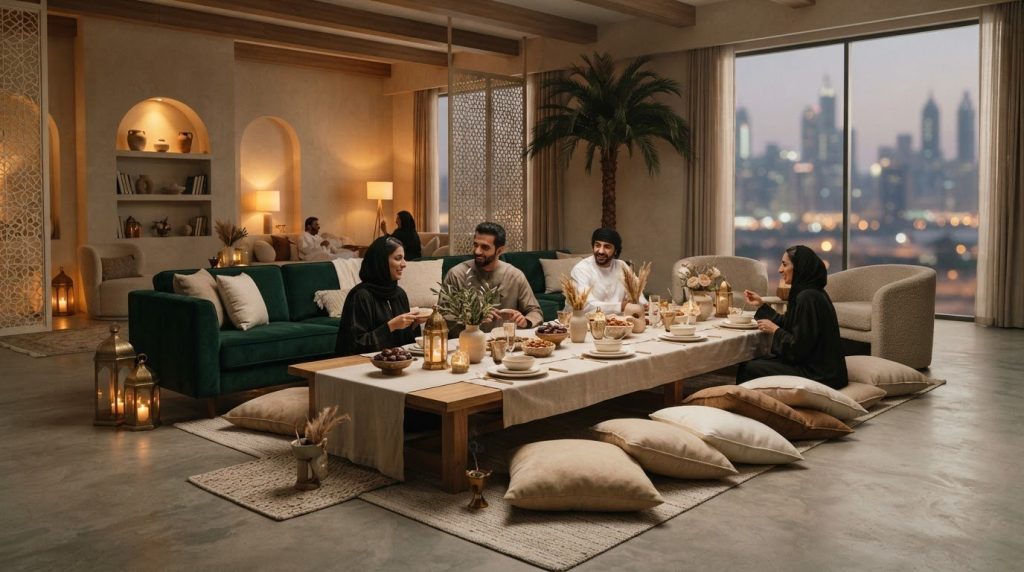
Ramadan decorations are considered visual details that help shape a gathering’s mood, welcome guests, and make a space feel connected to the occasion. They might include a softly lit table, a small lantern near the entrance, or a simple arrangement that draws people together. Purposeful Ramadan décor creates a warm, reflective welcome while leaving room for guests to gather comfortably.
Décor can signal care without turning every shelf, wall, and table into a display. A few intentional details often feel more welcoming than a crowded room, especially when guests need clear access to seating and dining areas. The setting should support the gathering, not compete with conversation, shared meals, or quiet moments.
The scale depends on the occasion. At home, a calm corner or a thoughtfully dressed dining table may be enough to create a sense of occasion. A larger iftar or community event may need a clearer entrance feature and décor that can be seen across the space, while keeping pathways and gathering areas open. For context on the month’s observances and customs, see this overview of Ramadan traditions and practices.
Balancing festive details with a reflective atmosphere
Crescents, stars, lanterns, and soft lighting can act as familiar visual cues, but none is essential. Choose details that feel meaningful to your household or guests, and let the atmosphere stay comfortable rather than overly staged. A lantern on a side table or a restrained string of warm lights can bring a gentle festive note without filling the room with competing focal points.
There’s no single palette or decorative tradition that suits every gathering. Some hosts may prefer warm neutrals and natural textures; others may enjoy richer colours or more noticeable accents. Pick what feels right for the people coming together, then use a repeated colour or material to make the choices feel considered.
Start with the gathering, not the shopping list
Before choosing decorations, clarify the occasion, approximate guest count, and which spaces people will use. An intimate home iftar, for example, may centre on the dining area, while a gathering that includes a separate welcome or seating space has different needs. The purpose and layout help determine how large a focal point should be and where supporting accents will feel natural.
Begin with one focal point, such as the dining table, entrance, or a dedicated seating area. Then add only details that help the space feel connected. Ask yourself:
- Where will guests arrive, sit, dine, and gather?
- Which area should feel most distinctive or welcoming?
- Will each decorative choice leave surfaces useful and walkways clear?
That small pause before planning or shopping makes the whole setup more thoughtful. It keeps décor in service of hospitality, so guests can move easily, find a comfortable place, and feel the care behind the gathering.
How to build a cohesive Ramadan decorations scheme
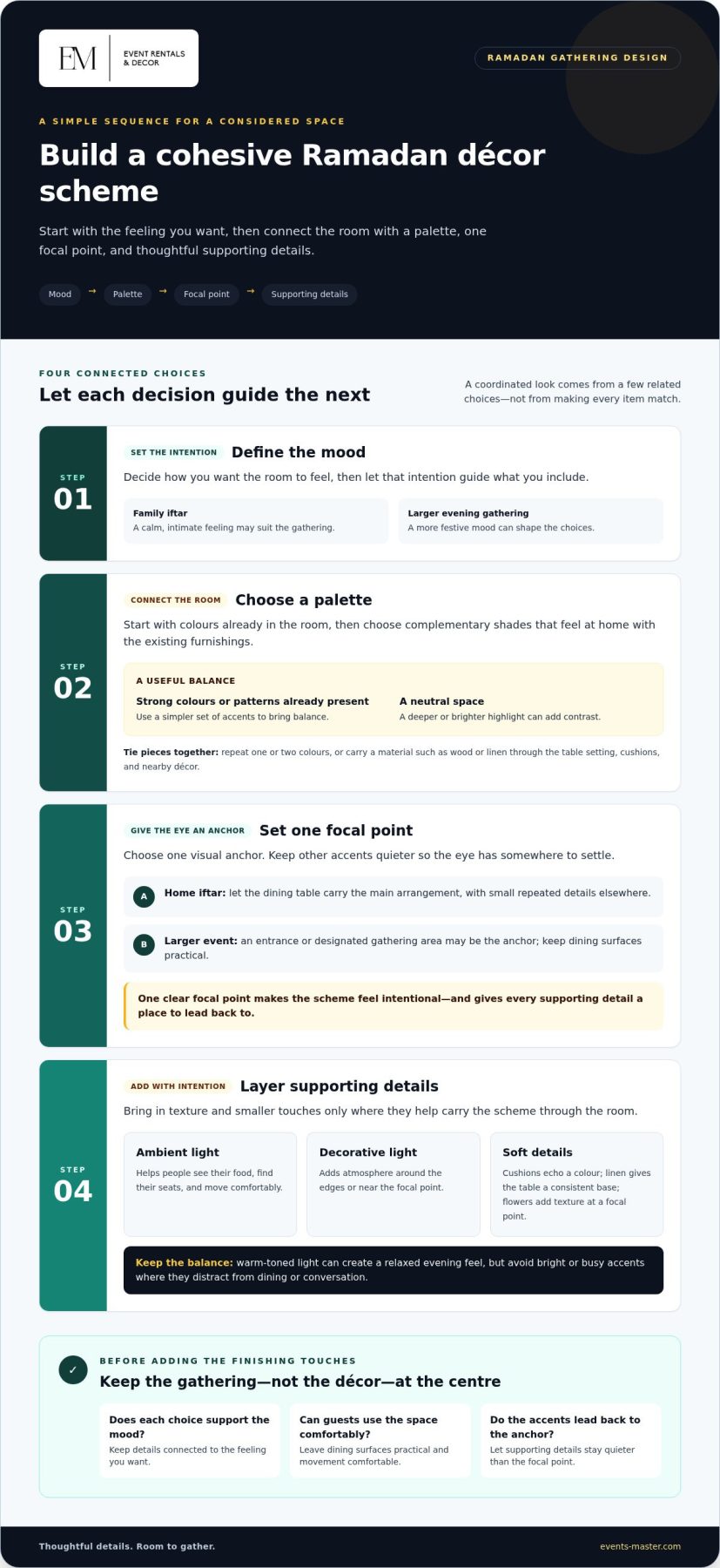
A coordinated look doesn’t come from buying matching pieces. It comes from making a few connected choices, then leaving enough space for guests, dining, and conversation. Use this simple sequence to shape ramadan decorations around the gathering instead of letting individual accents compete for attention.
- Define the mood. Decide how you want the room to feel, perhaps calm and intimate for a family iftar or more festive for a larger evening gathering. Let that intention guide what you include.
- Choose a palette. Start with colours already present in the room, then select a small group of complementary shades. Repeat one or two colours, or a material such as wood or linen, to help separate pieces feel related.
- Set a focal point. Choose one visual anchor, such as the dining table, entry area, or main gathering space. Keep other accents quieter so the eye has somewhere to settle.
- Layer supporting details. Add texture and smaller decorative touches only where they help carry the scheme through the room.
Choose a palette and a focal point
Think about the existing furnishings before settling on a palette. If the room already has strong colours or patterns, a simpler set of accents can bring balance; a neutral space can take a deeper or brighter highlight. There’s no need to make every item identical. A shared colour or finish is often enough to connect the table setting, cushions, and nearby decorations.
Then give the scheme a clear anchor. For an iftar at home, the dining table might carry the main arrangement, with small repeated details elsewhere. At a larger event, an entrance or designated gathering area may work better, while dining surfaces stay practical. One clear focal point makes a décor scheme feel intentional because it gives every supporting detail a place to lead back to.
Layer lighting and soft decorative details
Plan ambient lighting separately from decorative accents. Ambient light should help people see their food, find their seats, and move comfortably; decorative lighting adds atmosphere around the edges or near the focal point. Warm-toned light can create a relaxed evening feel, but avoid placing bright or busy accents where they distract from dining or conversation. For ideas on using this kind of glow, explore this fairy lights styling guide.
Soft details can bring the colours together without adding visual clutter. Cushions can echo a chosen shade in a seating area, table linen can give the dining setup a consistent base, and flowers can introduce texture at a focal point. Keep each choice useful to the overall scene, and don’t cover every surface. For a larger setup, rented chairs, sofas, floor cushions, party lights, and linen can help coordinate comfort with the look; rented event furniture and décor can be a practical part of that plan.
Which Ramadan décor choices work best for your space?
The right setup depends on what the space needs to do. A quiet corner for conversation, a dining area prepared for iftar, and a larger venue each call for a different balance of visual interest and usable room. Use this comparison as a starting point, then adapt it to your layout and guests.
| Space | Focal décor | Lighting | Seating | Surface needs |
|---|---|---|---|---|
| Compact home corner | A small grouped arrangement on one shelf or side table | Soft light that doesn’t take up valuable floor space | Keep existing seats easy to reach | Preserve clear tabletops for everyday use |
| Dining area | A restrained centrepiece or a detail at the table’s edge | Enough ambient light for guests to dine comfortably | Leave room to pull out chairs and sit down | Keep serving and dining space practical |
| Larger venue | A visible entrance or gathering-area feature | Use lighting to give separate zones a consistent feel | Make dining and lounge seating easy to distinguish | Plan table surfaces around the event’s use |
A single statement piece can make a larger impression, but it may dominate a small room or occupy space needed for dining. Several smaller accents offer flexibility and can be grouped to create a defined area, though spreading them everywhere can make a scheme feel scattered. Neither approach is right for every household or event. Consider guest movement, furniture placement, and how much attention you want the décor to draw.
Small rooms and intimate iftar gatherings
In a compact room, protect walkways first. Use a wall, shelf, or tabletop for a few accents instead of placing décor on the floor or across every available surface. Grouping details gives them presence without multiplying clutter. Before settling on an arrangement, make sure guests can reach their seats and the dining area comfortably, and that chairs can be moved without shifting decorations.
A home corner used for conversation may need only a subtle focal detail, while a dining area has to stay ready for plates, serving dishes, and shared use. If both functions happen in one room, keep the decorative arrangement compact and placed away from the busiest part of the table. The goal is a welcome setting that still works naturally once guests arrive.
Larger gatherings and event venues
In a larger venue, define the flow with distinct dining and lounge areas. Guests should be able to recognise where to sit, dine, or gather without decorative features interrupting the route between them. Coordinate table linen, chairs, lighting, and floral accents around one visual direction, but vary their placement to suit each zone. For functional dining layouts, this event folding table guide can help you think through how tables fit the space.
More room doesn’t mean every area needs a statement. A clear focal feature can anchor the venue, while restrained details carry the look across dining tables and seating areas. Let the layout lead; then use ramadan decorations to bring the zones together without making the gathering harder to navigate.
How to plan Ramadan decorations without clutter or last-minute stress
A little planning keeps the welcome feeling warm and the setup manageable. Work from the gathering’s practical needs outward: decide how guests will use the space, arrange the essentials, then add decorative details. This order helps prevent beautiful accents from ending up in the way of a chair, serving route, or open doorway.
A practical setup sequence for hosts
Start by mapping the guest journey, from arrival to dining and seating. Give each area a clear purpose, even if one room serves several functions. Place tables and chairs first, then check that guests can reach seats and service areas comfortably. Only after the layout works should you add lighting, flowers, linen, and smaller accents.
- Set the purpose. Note the kind of gathering and which areas guests will use, such as an entrance, dining space, or lounge area.
- Arrange the essentials. Place tables and seating, leaving clear routes between the entrance, dining surfaces, and guest areas.
- Coordinate service needs. Consider where catering equipment and serving items will sit, so they’re accessible without taking over the dining setup. This catering equipment rental guide can help you think through how service equipment fits the gathering.
- Add decorative layers. Bring in lighting, flowers, and other accents where they support the look without reducing useful space.
- Walk the route. Start at the guest entrance and move through the dining and seating areas. Check for blocked access, awkward turns, or décor that interrupts sightlines.
Do this walkthrough as if you’re arriving for the first time. Can guests see where to go? Can someone carry a serving dish through without weaving around decorations? A quick reset before the gathering gives you time to shift a table or remove an extra accent while it’s still easy.
Keep the look manageable and reusable
Choose flexible details that can move between a dining table, side table, or seating area rather than relying on a layout-specific display. Group reusable pieces together after the event, and store them in a way that makes them easy to find for another gathering. You can also set aside items that might transition into Eid décor, keeping the approach open to your own style.
Keep doors, walkways, serving access, and sightlines clear. A tall arrangement may look striking in one spot but obstruct conversation or visibility in another; smaller grouped details may be easier to adapt. For a gathering that needs coordinated tables, seating, linen, lighting, and service equipment, plan your event furniture and décor setup with Events Master.
With this sequence, ramadan decorations become the finishing layer, not another obstacle to solve at the last minute. The space can feel considered and festive while still working smoothly for the people sharing it.
How Events Master can help style a Ramadan gathering
Once you know how guests will dine, sit, and move through the space, coordinating the setup becomes much easier. Events Master LLC provides event equipment rental and décor styling across the UAE, supporting private gatherings and corporate functions. For an iftar, that can mean bringing practical pieces and decorative details into one considered plan, rather than treating furniture, lighting, and flowers as separate decisions.
Bring seating, dining, and atmosphere together
Dining tables and chairs create a clear place for the meal, while a sofa can help define a separate lounge area for conversation. Floor cushions may suit a relaxed seating arrangement where the layout allows them, and party lights can add a gentle evening glow. Flower decoration services can introduce colour or texture that ties these areas to the gathering’s chosen visual direction.
Think about how each rental category supports the event. For example, a family iftar in a larger venue might use dining tables and chairs for the meal, with lounge seating set apart so guests have another place to gather. Table linen can help carry the palette across the dining area, while flowers and party lights contribute finishing touches. In an outdoor setup, a tent can help define the event space, with furniture and décor arranged around its intended use.
The benefit is a setup where comfort and atmosphere work together. Coordinated choices can help guests understand where to dine and where to relax, while keeping the gathering’s overall look connected. The right balance will depend on your event, the space, and the way you want guests to come together.
Explore rental and styling support
Event equipment rental can be a practical option when you’re planning a private iftar or a corporate gathering and need the setting to suit that occasion. Rather than working around a fixed collection of furniture, you can plan from the needs of the space: dining tables and chairs for the meal, sofas or floor cushions for additional seating, and party lights, linen, flowers, or a tent where they fit the setup.
Events Master brings rental categories and décor styling together, including catering equipment for event service needs. This gives you a way to consider furnishings, practical equipment, and decorative details as parts of the same gathering plan. The aim is not to add more for its own sake, but to shape a welcoming arrangement that feels considered and works for your guests.
If you’re ready to turn your layout into a coordinated setup, you’re warmly invited to explore event rentals and décor styling with Events Master. Thoughtful ramadan decorations, comfortable seating, and a well-planned dining area can help make room for the best part of the evening: sharing it together.
Make space for a gathering that feels like yours
Before your gathering, take a moment to picture how you want guests to feel as they arrive and spend time together. A few notes about the mood, layout, and details that matter most can help turn inspiration into a setup that feels personal rather than overplanned. Let your Ramadan decorations reflect the welcome you want to offer, while leaving the evening’s best moments to unfold naturally.
If you’re shaping an iftar at home or arranging a larger function, Events Master’s rental and décor styling support can help bring the event plan together. Choose a next step that suits you, whether that means refining the layout or exploring options for the setting.
Explore event rentals and décor styling, and take the next step towards a gathering that feels warm, considered, and truly welcoming. Your thoughtful touches can make the space feel ready for connection.
Frequently Asked Questions
When should I put up Ramadan decorations?
There’s no single required date for putting up Ramadan decorations. Many hosts prepare before the month begins, so the home feels ready for its first evenings. For a gathering, work backwards from the event: decide when furniture and décor can be arranged, then leave time to test the layout and lighting before guests arrive. If you’re decorating gradually at home, start with the area you use most.
Can Ramadan decorations also work for Eid?
Yes, many decorative details can carry over to Eid with a small refresh. Keep flexible accents in place, then change one visible element, such as the table setting or flowers, to give the space a different feel. For example, a reusable neutral table covering can suit both occasions, while a new focal detail marks the change. Let your household’s preferences guide what stays and what you update.
How can I decorate for Ramadan on a limited budget?
Start with what you already own and refresh one area rather than trying to decorate the entire home. A folded piece of fabric can bring colour to a dining table, while existing cushions can help connect nearby seating to the room’s palette. Borrowing suitable items from elsewhere in the home can also save purchases. Prioritise a comfortable place to gather and useful lighting before adding extra accents.
Are lanterns necessary for Ramadan decorations?
No, lanterns aren’t necessary. They’re one familiar option, but a welcoming setting can come together through other details that suit your home, such as flowers, cushions, table linen, or a simple arrangement on an entry table. If you enjoy lanterns, use one as an accent rather than treating it as a required centrepiece. The feeling you create matters more than following a fixed decorating checklist.
How can I decorate an outdoor space for an iftar gathering?
Plan the outdoor setup around guest comfort and the conditions expected on the day. Arrange dining and seating areas so guests can move between them easily, and keep access to tables clear. For example, place decorative lighting where it contributes to the atmosphere without crowding dining surfaces. If using a tent, consider how its position relates to furniture and the route guests will take through the space.
How do I make Ramadan decorations feel respectful and personal?
Make choices based on the gathering and the people attending, rather than assuming one style represents everyone. You might choose a quiet colour scheme and a personal detail that has meaning for your household, or keep the setting simple if that feels more comfortable. Consider how symbols are used and whether they suit the occasion. A thoughtful welcome can come through care in the setup, not elaborate displays.
How can I keep Ramadan decorations from making a room feel cluttered?
Keep the number of focal points limited and decide in advance which surfaces need to remain available for guests. For example, leave a side table clear if it will hold serving items, and avoid placing accents where they narrow the route between the entrance and seating. Group smaller decorations together instead of scattering them. Before adding another piece, step back and consider whether it adds meaning or simply occupies space.