
Party ideas
Catering Equipment Hire for Event Delivery and Setups
Yes, catering equipment hire can include delivery to an event venue, letting you arrange the equipment you need without buying it outright. Delivery and setup depend on the rental arrangement, venue access and when the space needs to be ready.
Getting equipment to the venue is only part of the plan. You’ll also need serving essentials and a comfortable setup suited to the occasion, whether you’re hosting a private celebration or a corporate event.
This guide explains how delivery and setup fit into the hire process, what to consider for different occasions and how renting can help you avoid upfront purchase costs. You’ll also learn how to coordinate serving equipment, tables, chairs and linens, making it easier to plan a welcoming event.
Key Takeaways
- Plan venue access, delivery timing, setup and collection together to keep event-day logistics clear.
- Match hired equipment to the occasion, guest experience and practical needs of weddings, corporate events and private parties.
- Hiring can help avoid buying equipment outright; consider what you need for the event and how often you’ll use it.
- Arrange buffet and serving areas around the flow of guests, with equipment suited to how food will be presented.
- Coordinate tables, chairs, linens and other furniture to make the venue feel welcoming and work well for your event.
Can I get catering equipment delivered to my event venue?
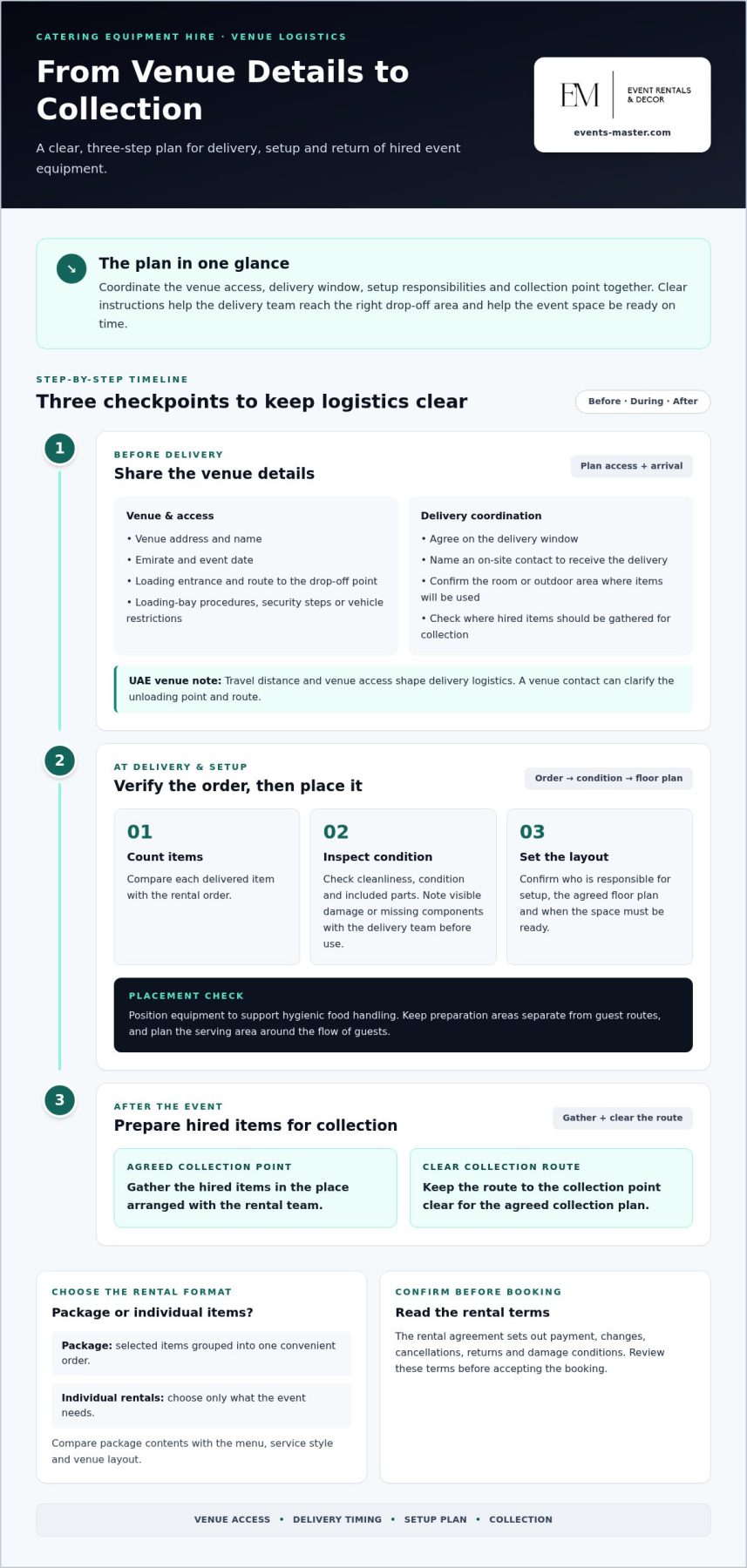
Delivery to an event venue can be part of a rental arrangement. Plan it around the venue address, access route, event schedule and collection needs. Include practical details such as the loading entrance and the room or outdoor area where the equipment will be used. Clear instructions help the delivery team reach the right drop-off point.
Across the UAE, travel distance and venue access shape delivery logistics. Share the emirate, venue name, event date and access instructions when arranging a rental. Include any loading-bay procedures, security steps or vehicle restrictions that could affect arrival. A venue contact can clarify where equipment should be unloaded and which route to use.
Agree on setup responsibilities and timing in advance. Setup could mean leaving items in a designated area or arranging them according to an agreed floor plan. Specify the arrangement, when the space must be ready and who will receive the delivery. Also agree where items should be gathered for collection after the event.
- Before delivery: Share the venue address, access route, delivery window and on-site contact.
- At setup: Compare delivered items with the order and position them according to the floor plan.
- After the event: Gather hired items in the agreed place and keep the collection route clear.
How do packages compare with individual items? A catering equipment hire package groups selected items into one convenient order, while individual rentals let you choose only what your event needs. Compare the package contents with your menu, service style and venue layout.
What food safety and equipment regulations apply to catered events in the UAE? Food businesses must follow the food safety requirements that apply to their emirate and event setting. Plan equipment placement to support hygienic food handling and keep preparation areas separate from guest routes.
How far in advance should equipment be booked in the UAE? Arrange the rental once your event date, venue and equipment list are settled. This gives you time to coordinate access, setup, delivery and collection with the venue schedule.
What rental terms, deposits, cancellations and damage charges apply? These terms are set out in the rental agreement. Before accepting the booking, review its conditions for payment, changes, cancellations, returns and damage.
What should customers check when inspecting hired equipment? Count each item against the order and inspect its cleanliness, condition and included parts. Before using the equipment, note any visible damage or missing components with the delivery team.
Is outdoor rental available, and what power or weather requirements apply? Outdoor suitability depends on the equipment and site conditions. Plan access to power and safe cable routes, and protect the setup and serving area from weather where needed.
Rental for weddings, corporate events and private parties
The right rental plan starts with the occasion, guest experience and event layout. A wedding, business gathering and family celebration each call for a different mix of equipment and décor.
For a wedding, map the guest journey from arrival to dining and dancing. The welcome area, dining space and buffet may each need distinct equipment, linens or floral details. For a corporate event, start with the format: a seated presentation needs a different layout from a networking reception. A private party might centre on a buffet and relaxed seating, keeping service practical without crowding the room.
Inventory needs depend on your event plans and how often you host. For a one-off celebration, renting provides the items you need for that date without leaving you to store them between occasions. If your organisation holds events throughout the year, separate recurring requirements from one-time needs. This helps prevent duplicate orders and highlights which items vary by venue or format.
Event Equipment Categories
Rental categories can include catering equipment, table linens and decorative elements, with the right mix shaped by the event’s purpose. For a pop-up kitchen, list the equipment needed for food preparation and service, then plan how items will move from the work area to guests. At a wedding reception, linens and floral decoration may support the visual plan. Match each category to a specific task.
Make a simple inventory by area: food preparation, food service, guest tables and décor. For each item, note its intended use and the quantity needed for the layout. This makes it easier to see what to rent together and what you can leave out, reducing last-minute hassle.
Furniture and Setup Essentials
Furniture and setup choices shape how guests move through a room as well as how it looks. Mark entrances, dining areas, buffet points and conversation spaces on a floor plan before choosing tables and seating. For a corporate reception, keep walkways open around networking areas. For a private dinner, prioritise comfortable seating and easy access to serving points.
Linens and decoration should complement the furniture arrangement, not compete with it. Choose table covers that fit the planned tables, then coordinate colours and floral details with the event’s look. A written layout helps the setup team place each piece correctly.
For a pop-up kitchen or temporary event space, plan work and guest areas as separate zones. List the equipment needed at each station, then consider how staff will carry food and supplies between them. A wedding with a buffet, for example, benefits from keeping the serving route distinct from guest seating. Explore event rental and decoration options as you shape the plan around your occasion.
Avoiding upfront equipment costs
Buying equipment for one event can tie up money in items you may rarely use again. Renting lets you plan for a specific occasion, such as a wedding reception or company gathering, without purchasing every serving item outright. Include the rental cost in your budget, while avoiding ownership of equipment that may need storage between events.
Start with an event inventory. List the equipment needed for food preparation, serving, guest tables and linens, then note what you already own or can use at the venue. For example, a business hosting a one-off product launch may need serving equipment for that event but have no ongoing need to store it. A focused rental list also helps keep spending on practical requirements.
Compare renting and buying by looking beyond the initial purchase cost. Consider how often each item will be used, where it will be stored and the effort involved in moving and maintaining it. A company hosting occasional staff celebrations may find renting better suited to changing layouts than keeping a permanent stock. Frequent hosts should track recurring needs separately from one-time extras.
- Define the event: Record the venue, guest arrangement and service style, such as a buffet or seated meal.
- Build the list: Separate essential equipment from optional items, including linens and serving pieces.
- Review existing resources: Remove items already supplied by the venue or available in your inventory.
- Set the rental scope: Request a quote based on the selected items, rental period, delivery and setup requirements.
The price depends on the case and is given after a quote request; the selected equipment, rental period, delivery and setup needs affect the total. Gathering these details makes it easier to compare the planned rental with your event budget. Don’t add items just because they appear in a package; include them only when they serve a clear purpose.
For a private celebration, that could mean renting only the pieces needed for the serving area instead of buying a full collection. For a corporate reception, choose equipment to suit the format, then remove items the venue already provides. Avoiding duplicates can reduce unnecessary spending without changing the guest experience.
After the event, consider whether you are likely to need each item again before buying it for future use. Record what was used, what went untouched and what the venue supplied. This review creates a more accurate inventory for the next occasion, helping you decide what to rent again and what might make sense to own.
Buffet and serving stations
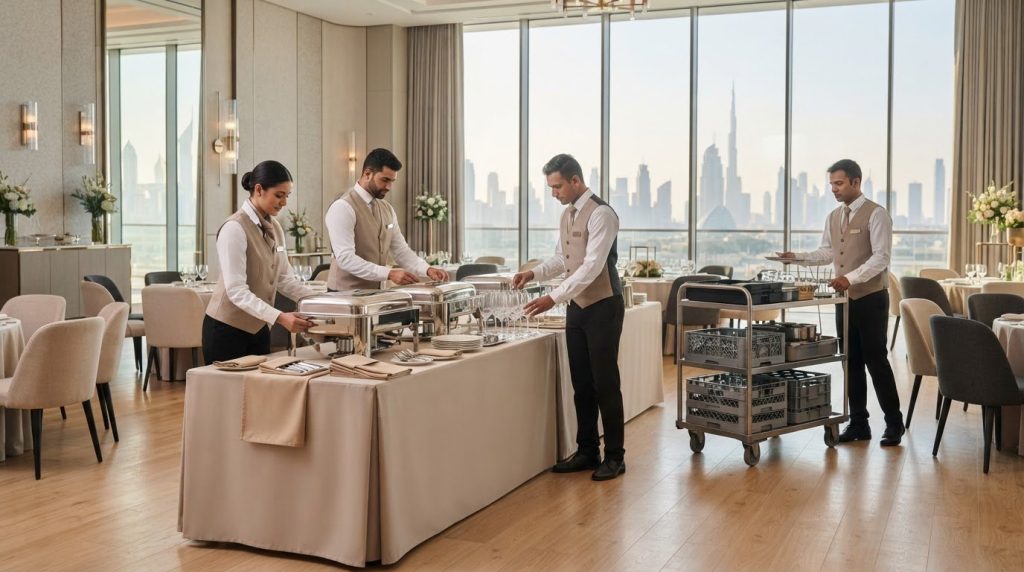
A clear buffet plan helps guests serve themselves without crossing staff work routes. Start with the menu and venue layout, then place each serving point where guests can approach it comfortably. For a reception with food, drinks and dessert, separate the areas so one queue doesn’t block the others.
Match equipment to how each dish will be presented. A self-service buffet needs a surface for dishes, room for serving utensils and space for guests to move along the line. A staffed station may need more working space behind the table. With catering equipment hire, choose items to suit function and layout rather than selecting a broad assortment without a plan.
Draw the serving route before finalising the equipment list. Mark where food arrives, where staff replenish it and where used plates go. For example, placing the return point beside the buffet can interrupt guests choosing their meal. A separate clearing area keeps the serving route open and makes the room easier to manage.
- For a seated meal: Place serving points near the dining area, while keeping a clear route between tables.
- For a standing reception: Spread food stations around the room to avoid crowding one entrance or corner.
- For a dessert display: Position it apart from the main meal line so guests can approach it at another moment.
Use table linens to give the serving area a finished look and connect it with the event design. Measure the table before choosing covers, and consider how the cloth will hang. For instance, a buffet beside a decorated dining area looks more considered when its linen works with the broader colour plan.
Leave practical space for staff and supplies. A narrow venue corner may suit a compact station, while a larger room can accommodate separate food and drink points. Keep serving tools close to the dishes they belong to, and arrange items in the order guests are likely to use them. A simple sequence, with plates first and accompaniments after, makes self-service easier to follow.
Before the event, walk through the layout as both a guest and a server. Check that guests can reach each dish without leaning across someone else, and that staff can replenish the station without crossing the queue. Adjust the floor plan if a table blocks a doorway or dining area. These practical choices help the buffet feel welcoming, tidy and easy to use.
Tables, chairs, linens and furniture
Tables, chairs and linens shape how guests use a venue, not just how it looks. Start with the event format, then map dining, serving and conversation areas. A seated dinner needs space for place settings and clear paths between chairs. A networking reception needs open circulation, with furniture that encourages conversation without blocking entrances.
Choose tables for their purpose. Dining tables support meals and shared seating, while cocktail tables suit standing conversations and quick refreshments. Coffee tables can anchor a lounge area beside sofas or chairs. For a wedding, separate dining from relaxed gathering space. For a corporate reception, keep routes clear around the presentation or welcome area.
Count seats from the guest plan rather than estimating from the room’s appearance. Mark the venue dimensions, doors and fixed features on a simple floor plan. Add table and chair positions, leaving practical routes to exits and serving points. If the venue has pillars or an unusual shape, test the layout on paper before choosing furniture.
- Dining: Pair tables with chairs and check that guests can sit and move comfortably.
- Reception: Use cocktail tables to create places for guests to pause and talk.
- Lounge: Arrange coffee tables with seating to define a quieter conversation area.
- Finishing details: Coordinate tablecloths and linen covers with the event palette and table plan.
Linens should suit the table size and intended use. A cover that is too short may look unfinished, while excess fabric can interfere with chair movement. Match the colour and texture to the décor, then consider how dining tables will look beside floral details or a serving station. For a corporate event, a restrained palette can keep attention on the programme.
Review the complete arrangement from a guest’s perspective. Chair style should work with the table height and event mood, while furniture placement should leave room for staff to serve. A wedding dining area can feel cohesive when linens, seating and table décor follow the same visual direction. Keep guest routes and practical use at the centre of every choice.
Build your layout around the venue and occasion, then choose furniture to match. Plan your event furniture rental with the tables, chairs and linens your setup calls for.
Events Master: Dining Tables
Events Master can help when your venue plan needs furniture to bring dining and conversation areas together. Its event hire options include Dining Tables for seated gatherings, Cocktail Tables for standing receptions and Coffee Tables to anchor relaxed seating areas.
Choose pieces according to how guests will use the space. For a formal meal, start with the dining layout; for a reception, consider where guests will pause and talk. A Sofa can define a lounge area, while Dining Tables can support shared meals or displays. Planning these zones makes it easier to create a coherent setup for your occasion.
You’re welcome to visit event furniture options at Events Master and explore pieces for your event.
Make your event plan feel complete
A space that feels right for the occasion is often the finishing touch. Before settling the plan, picture what guests should experience as they arrive, gather and share a meal. That intention can guide your choices, keeping catering equipment hire connected to the atmosphere you want rather than turning into a checklist of objects.
Events Master offers Dining Tables, Cocktail Tables and Coffee Tables to help create distinct areas for dining and conversation. Choose pieces that suit your event’s mood, whether you’re planning a welcoming meal setting or a relaxed place to gather. A thoughtful layout gives the celebration room to feel personal.
Ready to take the next step? Contact Events Master to discuss your hire and start shaping an event setup that feels right for your guests. Your plans can come together one considered choice at a time.
Frequently Asked Questions
Do you provide short-term and long-term rentals?
Events Master provides event equipment rental for private parties and corporate functions. Plan the booking around your event dates and required items. For a single celebration, prepare a list for that occasion; for recurring events, outline each date and its equipment needs. This helps ensure the rental request reflects your schedule and actual use.
How do I return the rented equipment?
Follow the return or collection arrangement for your booking. After the event, gather hired items in the agreed area and keep them separate from venue-owned equipment. For example, designate a corner for rental tables and chairs, then tell the person handling the venue handover where everything is before the space is cleared.
Is there a minimum order for renting catering equipment?
Build your order around the equipment your event requires. A small private gathering may need a focused selection, while a corporate function may call for distinct items for serving, seating and display. Separate essentials from optional additions, then prepare one clear list. This keeps your request tied to the event plan instead of adding equipment without a defined purpose.
What catering equipment is available for hire in the UAE?
Events Master offers catering equipment, along with furniture and event finishing items. Depending on your setup, you can also consider tables, chairs and table linens. For a buffet, first map the dishes, serving sequence and available space. Then identify the equipment that supports those tasks, so your selection suits the menu and how guests will use the serving area.
Which catering equipment hire companies operate across the UAE?
Events Master LLC provides event equipment rental and venue decoration across the UAE. Its offerings include catering equipment and furniture for private parties and corporate gatherings. To plan a rental, prepare the venue address, event date and equipment list together. These details help shape a request around your event location and setup.
What are the delivery, setup, collection, and cleaning fees for catering equipment hire?
The price depends on the case and is given after a quote request; the equipment selection, rental period, delivery, setup, collection and cleaning requirements affect the total. List the services you need alongside the equipment. For example, distinguish delivery to a drop-off point from arranging items in the event space, so the requested scope is clear.
What equipment is needed for different event sizes and types?
Choose equipment according to the event format, guest activities and venue layout. A seated meal calls for dining tables and chairs, while a standing reception may suit cocktail tables. A lounge area could use a sofa and coffee table. Sketch the event zones, such as dining, serving and conversation, then list the items needed in each area.