
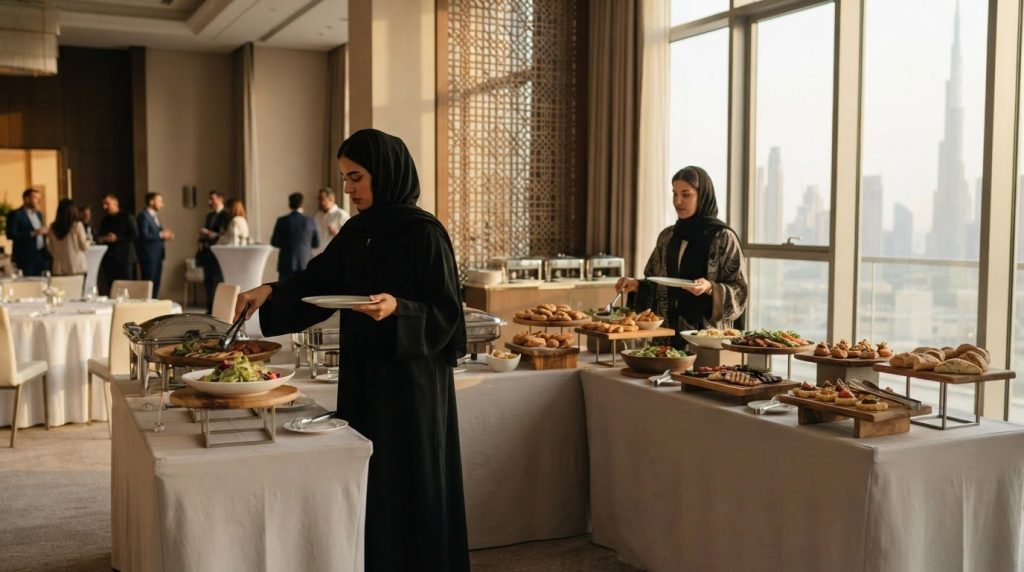
Party ideas
Buffet table setup ideas for polished, easy-flowing events
A polished buffet can still feel chaotic if guests don’t know where to move. The best buffet table setup ideas pair a clear guest route with a layout that suits the venue: choose a linear, U-shaped, island or round arrangement, then style it with linens, serving pieces and decor that fit the event. The right setup makes the spread easy to approach and pleasant to look at.
Thoughtful spacing, useful serving essentials and restrained decoration can make a buffet welcoming without crowding the food. These buffet table setup ideas cover practical styling for different occasions, layouts that support guest movement and the essentials to prepare, so your event feels considered from the first glance to the last serving.
Key Takeaways
- Build a balanced display with neutral linens, a few well-chosen decorations and a clear focal point.
- Match the styling to the occasion, using greenery and wood for a rustic feel or clean spacing for a minimalist look.
- Choose a linear, U-shaped, island or round arrangement based on the venue and how guests will move through it.
- Prepare serving pieces, risers, dish labels and table linens so the buffet feels organized as well as inviting.
1. Neutral tablecloths and restrained decorations
Start with a white, champagne, taupe or soft gray tablecloth to give serving pieces a calm background. For a polished UAE event, pair neutral linen with sleek tableware and subtle metallic accents, such as gold-toned candle holders. Keep the palette consistent across the buffet and nearby dining area, so the display feels connected to the room rather than separate from it. A runner or overlay can add texture without covering the whole table in competing patterns.
Arrange the largest decorative pieces first, then work inward. Place a statement lamp at one end and a floral arrangement at the other, leaving the middle clear for dishes and serving pieces. If you have a treasured ornament or decorative bowl, make it the centrepiece and keep other accents simple. On a narrow table, use fewer decorations to leave guests room to serve themselves.
Choose decorations that suit the occasion without crowding the spread. Faux flowers or small candles can soften a simple cloth, while a framed print or backdrop panel can anchor the display. Skirting, fitted covers and overlays give a table a more finished look. Keep candle flames away from linens and serving areas, and place fragile props out of guests’ reach.
Glassware and bar accessories can be part of the styling. Arrange stemless glasses on a tray beside an ice bucket, or group tumblers with a carafe at one end of the buffet. This keeps drinks separate from the main serving area while making the display feel ready for guests. Repeat one accent, such as a metallic detail or soft floral colour, across the glasses, tray and table decor.
2. Styling buffet tables for different events
Choose a look that suits the occasion, then repeat its colours and materials across the table. For a refined rustic gathering, combine neutral linens, soft greenery and light wood accents. A muted tropical theme can bring together soft coral, sandy tones, muted greens and palm leaves. These palettes work for celebrations where you want warmth without a busy display.
Affordable party styling can start with a simple tablecloth, greenery and items already suited to the event. Add height with tiered trays or cake stands, then repeat one colour or material in a few small decorations. This creates a considered look without relying on a large collection of props.
For minimalist styling, keep only useful serving pieces and a few chosen accents, with clear space between them. A dessert bar can use a neutral cloth, simple stands and carefully spaced cakes or pastries. Let the desserts provide the colour instead of surrounding them with extra decorations.
Refined rustic, muted tropical and clean minimalist styles are popular options. Make any theme feel consistent by repeating its main colours in the linens, serving pieces and wall decor. For example, pair sandy tones with greenery or use soft coral as a small accent against a neutral base.
Give the wall above the buffet a role, too. Centre a large art print above the table to anchor the display, or use wall lights to highlight artwork and add ambient light. Soft string lights can create a gentle glow for an evening celebration. Keep the wall feature in scale with the table so it draws attention without overwhelming the food.
For a polished finish, coordinate the table’s visual details with event-ready table styling. Choose one focal point, such as a print or tiered dessert display, then leave enough open surface for serving. That balance helps the event feel personal and welcoming, whether the setting is rustic, tropical or pared back.
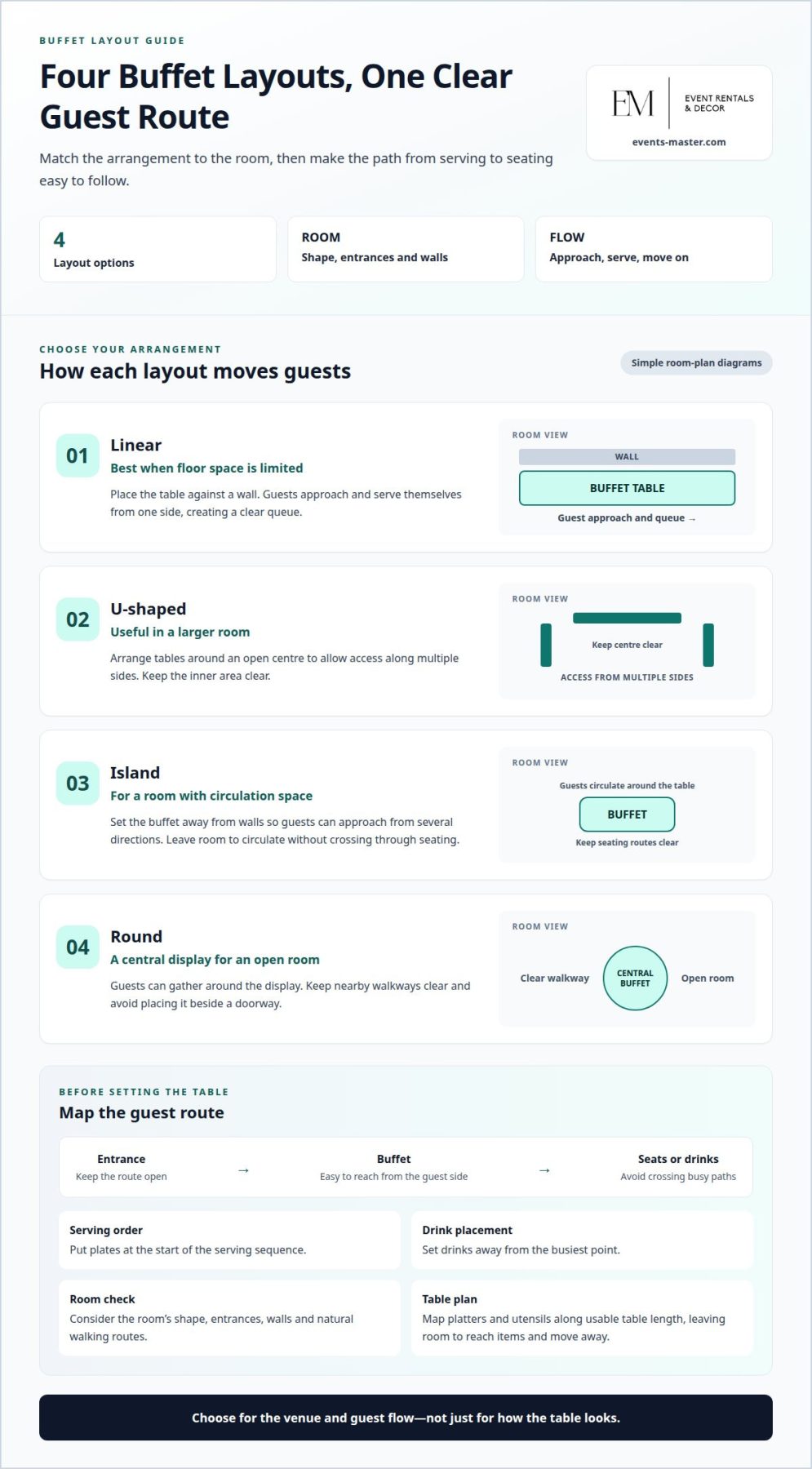
3. Choosing a buffet layout to suit the venue and guest movement
Start by considering the room’s shape, entrances, walls and natural walking routes. A layout that works in a spacious reception room may obstruct movement in a compact dining room. Position the buffet so guests can approach it without crossing the main entrance, seating area or route to the exit. Keep the serving surface easy to reach from the guest side.
No single amount of table space suits every guest or menu. Consider the serving dishes, drinks and how guests will approach the buffet. Map each platter and utensil along the usable table length, leaving room for guests to reach items and move away. A dessert-heavy spread, for example, needs a different arrangement from a meal with several hot dishes.
- Linear: Place the table against a wall when floor space is limited. This creates a clear queue, but guests approach and serve themselves from one side.
- U-shaped: Arrange tables around an open centre to provide access along multiple sides. This can suit a larger room, provided the inner area stays clear.
- Island: Position the buffet away from walls so guests can approach from several directions. It works best where the surrounding space allows people to circulate without cutting through seating.
- Round: Use a circular arrangement as a central display in an open room. Guests can gather around it, so keep nearby walkways clear and avoid placing it beside a doorway.
Trace the likely route from the entrance to the buffet, then onward to the seats or drinks. If guests would have to pass one another, shift the table or choose a layout with access from more than one side. Put plates at the start of the serving sequence and drinks away from the busiest point.
In a narrow venue, a linear buffet can preserve open floor space. In a broad reception room, an island layout can spread movement around the display. Choose based on the venue’s dimensions and guest flow, not just how the table looks.
4. Buffet table essentials
A useful buffet needs more than attractive platters. Prepare trays, platters, cake stands, tiered trays and pedestal risers to give each dish a clear place. Use a menu board to show what’s available, then add small signs beside dishes for quick identification. Keep serving utensils with their matching platters, and leave space for plates, napkins and drinkware.
Treat the table as both a display and a practical surface. Set out dishware and drinkware where guests can reach them without crossing the serving line. For example, arrange plates first, followed by savoury dishes, sides and desserts. A riser can lift a tray behind lower dishes, making food easier to see while keeping the arrangement organized.
For safe serving, keep hot foods in suitable hot-holding equipment and cold foods chilled. Monitor food during service, and replace serving dishes as needed rather than leaving food out while the buffet continues.
Label each dish with its name and identify relevant ingredients, such as nuts, dairy, eggs or wheat, using recipe information. Put labels beside the matching dishes and keep each serving utensil with its dish so guests can identify what they’re choosing.
Reusable tablecloths and napkins are an alternative to single-use items, according to the European Union. Choose linens that suit the event, then prepare a simple setup checklist: serving pieces, labels, utensils, dishware and drinkware. This makes missing essentials easier to spot before guests arrive.
Ready to prepare a polished buffet? Plan your buffet table essentials around the dishes, serving pieces and linens your event needs.
Events Master: Table Cloths and Linen Covers
Events Master LLC offers Table Cloths and Linen Covers to coordinate a buffet table with its event setting. They suit private celebrations and corporate gatherings where the table needs a polished finish. Choose a cover that complements the room’s palette and provides a neat base for serving pieces.
For a complete event setup, Dining Tables, Cocktail Tables and Coffee Tables can define areas for dining and mingling. Choose pieces according to the layout and how people will use the space, then coordinate the buffet linens with the surrounding furniture. The result feels considered without making the table harder to use.
Planning a buffet? Contact Events Master LLC to discuss table linens or event furniture for your setup.
Make your next event feel effortless
Let the buffet reflect the welcome you want guests to feel. Choose buffet table setup ideas that suit your gathering, then shape the details around the room and the atmosphere you want to create. A thoughtful setup makes the meal part of the celebration, not simply a place to serve food.
For the wider event space, Events Master offers Dining Tables, Cocktail Tables and Coffee Tables to help define dining and mingling areas. Coordinate these pieces with the buffet to keep the setting connected. As you plan, consider how each area will work together and what will help guests feel at ease.
Contact Events Master to plan your event, and start shaping a warm, welcoming gathering your guests will enjoy.
Frequently Asked Questions
How to arrange food on a buffet table for easy flow?
Arrange dishes in the order guests are likely to serve and eat them, grouping similar choices together. Keep sauces beside the dishes they accompany, and provide each item with its own serving utensil. Put popular options where guests can reach them without reaching across another dish. Clearly label and separate any dishes prepared for special diets.
How many serving dishes, plates, and utensils are needed for a buffet?
Plan a serving dish and matching utensil for each menu item. Estimate plates based on expected attendance and whether guests may return for more. Add serving pieces for condiments or toppings, such as separate bowls and spoons for sauces. Let the menu guide your setup: a meal with several sides needs more dishes than a simple spread, while desserts need their own plates.
How to set up a buffet table for a small space?
In a small space, keep the spread compact instead of turning one table into separate stations for every course. Serve food in manageable groups, and place drinks elsewhere if there’s a suitable surface. Choose dishes that fit the table and remove decorative pieces that don’t help guests serve or identify food. This preserves usable space without making the setup feel bare.
What is the best order for placing plates, food, cutlery, and drinks?
Place plates first, followed by the main dishes and sides; set cutlery and napkins at the end so guests don’t need to carry them while serving. If the room allows, put drinks at a separate point to reduce traffic around the food. For example, set glasses beside a drinks station instead of between dishes, where they compete for serving space.
What buffet table setup works best for weddings, birthdays, or office events?
The right setup depends on the event’s mood and how guests will use the space. For a wedding, coordinate the display with the reception style and keep it composed for photographs. A birthday can feel more playful with themed colours or a dessert feature. For an office gathering, prioritize quick access and a straightforward layout that works during a short break.
How much table space is needed per guest for a buffet?
No single amount of table space works for every guest or menu. Consider the serving dishes, drinks and how guests will approach the table. Map the platters and utensils along the usable table length, leaving room for guests to reach items and move away.