
Party ideas
A closer look at uplighting for parties and birthdays
A party doesn’t need more light everywhere to feel transformed. Uplighting for events draws attention to walls, columns and décor, while wash lighting spreads a smooth, even glow across a larger area. For a birthday, focused colour can shape the room’s atmosphere without simply making the whole venue brighter.
Both styles have their place: uplighting highlights details, while wash lighting creates an overall foundation. The right choice depends on the venue, the look you want and the celebration’s mood. Here, you’ll learn how the two approaches differ, how uplighting can change a party space, and how colour and placement help set the tone for birthdays and other events.
Key Takeaways
- Understand when focused uplighting creates more impact than an even wash, and how professionals weigh wired, battery-powered and wireless DMX fixtures.
- See how venue size, wall surfaces and fixture spacing influence the colour and atmosphere across a room.
- Learn how a considered colour palette can help a birthday feel lively, elegant or relaxed without competing effects.
- Discover how lighting choices can support the celebration’s layout and mood, from guest areas to photo backdrops.
1. What is the difference between uplighting and wash lighting?
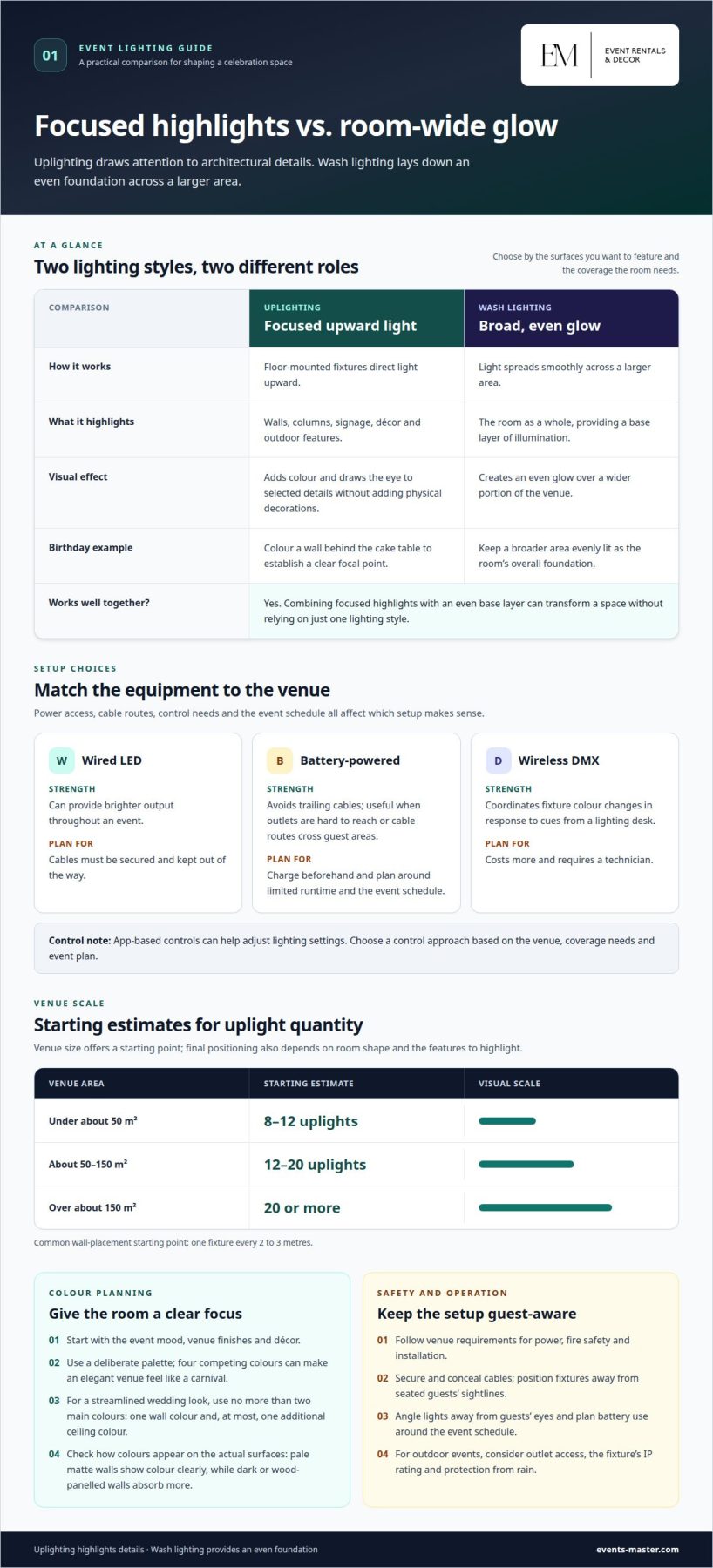
Uplighting directs light upward to highlight walls, columns or décor. Wash lighting spreads a smooth, even glow across a larger area. At a birthday venue, uplights can draw attention to a textured wall, while wash lights provide a base layer of illumination across the room. Combining both effects can transform the space without relying on just one lighting style.
LED fixtures are useful when colour choice and energy efficiency matter. Wired LED uplights can provide brighter output throughout an event, but their cables need to be secured and kept out of the way. Battery-powered fixtures avoid trailing cables, making them useful where power outlets are hard to reach or cable routes would cross guest areas. They need charging beforehand and have limited runtime, so plan around the event schedule.
App-based controls can help adjust lighting settings, while wireless DMX lets fixtures respond to cues from a lighting desk. Wireless DMX can coordinate colour changes, but it costs more and requires a technician. Choose a setup based on the venue’s power access, the coverage you want, control needs and the event plan.
For power, venue, fire-safety and installation rules, the setup must follow the venue’s requirements and suit its available power and layout. Cables should be secured and concealed, and fixtures positioned away from seated guests’ sightlines; according to the OECD, portable halogen lamps used in many uplighters operate at 250-500 W and can present a significant fire risk.
Lighting rental costs depend on the event scale, equipment selection, rental period, and delivery and installation needs. The price is provided after a quote request, based on the planned setup.
Common risks include cables becoming trip hazards, glare reaching guests’ eyes and battery runtime ending before the event does. Professionals reduce these risks by routing and securing cables, angling lights away from sightlines, and planning battery use around the schedule. For outdoor events, battery-operated fixtures can help where outlets aren’t accessible, while the fixture’s IP rating and protection from rain matter.
2. What uplighting is and how it changes a venue
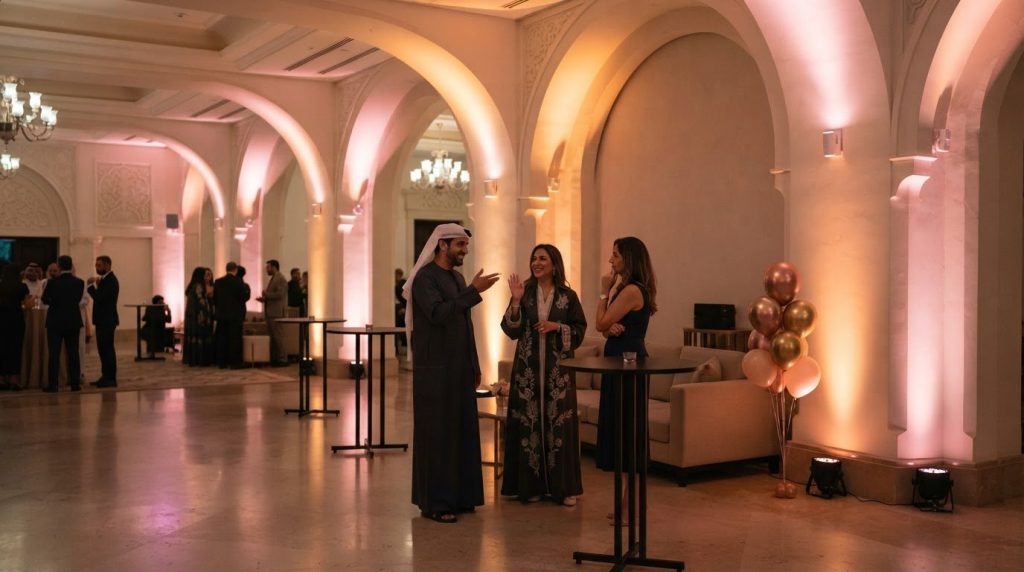
Uplighting uses floor-mounted fixtures aimed upward to colour walls, columns, signage or outdoor features. In a Dubai ballroom, lights can highlight a columned entrance, frame a stage or bring a plain wall into the celebration’s design. The effect changes the room’s visual character without adding physical decorations. Uplighting for events can make architectural details part of the celebration itself.
Start by identifying the venue’s focal points, such as an entrance, cake table or photo backdrop. Then consider which surfaces should catch the light and how guests will use the space. Pale matte walls show colours clearly, while dark or wood-panelled walls absorb more colour. Brick and stone can create shadows, adding depth or visual clutter depending on the feature.
Venue size gives professionals a starting point for estimating fixture quantities. For venues under about 50 square metres, a starting estimate is 8 to 12 uplights. For about 50 to 150 square metres, it is 12 to 20; over about 150 square metres, it is 20 or more. A common placement starting point is one fixture every 2 to 3 metres along a wall. Final positioning also depends on the room’s shape and the features to highlight.
Colour planning connects the venue’s surfaces with its décor. For a streamlined wedding look, use no more than two main colours. One wall colour, with at most one additional ceiling colour, keeps the scheme coordinated. Consider whether the chosen colours will stand out against the room’s finishes and decorations.
For a birthday, a coloured wall behind the cake table can create a clear focal point, while the rest of the room stays visually balanced. Thoughtful uplighting for events can complement that layout and bring the celebration’s focal areas into view. Explore party lights for event settings as part of the celebration’s wider look.
3. Choosing uplighting colours for different moods
Colour shapes how guests read a room before the celebration begins. Warm white and amber can give a wedding a soft, welcoming glow, while soft pink, lavender or gold-toned light can complement romantic décor. For a birthday, a stronger colour can energize a focal wall, while a softer shade keeps the dining area intimate.
Start with the event’s mood, then match the colours to the venue finishes and décor. A gold-toned scheme may complement warm table details, while lavender can create a gentler feel against a pale wall. Colours look different across surfaces, so consider the wall material and surrounding décor before choosing fixtures and their positions.
Keep the palette deliberate. Four competing colours can make an elegant venue feel like a carnival, while a restrained combination gives the eye a clear focus. For a wedding, a practical guideline is to use no more than two main colours. One wall colour, with at most one additional ceiling colour, can add definition without making the room feel busy.
Outdoor celebrations call for colours that suit the setting as well as the event theme. Uplights can illuminate an entrance, garden feature or designated photo backdrop, with a consistent colour plan across those focal points. Aim for a noticeable atmosphere that doesn’t distract from the people and décor.
When choosing an event uplighting company, look for a clear design process that connects the event’s mood, venue surfaces, colour palette and focal points. For a wedding with gold table details, for example, the plan should consider how the wall colour will look alongside them. It should also account for photography backgrounds, so the lighting supports the scene rather than competing with it.
For a birthday, a lively colour can energize the cake area while softer tones keep guest seating comfortable. This balance makes each part of the venue feel intentional, from guests’ arrival through the final photographs.
4. Uplighting for parties and birthday events
Birthday lighting works best when it reflects how guests will use each part of the venue. At a family dinner, a gentle colour around the dining area can feel welcoming, while a brighter accent near the cake creates a natural gathering point. For a larger party, professionals can give the entrance, dance floor and photo backdrop distinct roles through carefully placed light.
The celebration’s schedule matters too. A birthday might begin with dinner before shifting to music and dancing. A lighting plan can keep the dining area comfortable while drawing attention to the livelier centre of the party. Coordinated controls can also shift the atmosphere between moments.
For children’s birthdays, colourful light can energize a feature wall or party table, but clear sightlines and comfortable brightness still matter. At an adult milestone celebration, warm white or amber can create a more intimate feel around speeches or family photographs. Wall finishes and décor affect how colours appear, so adapt the plan to the actual space.
A corporate event has different priorities from a birthday, even in the same venue. A company celebration may need a polished arrival area and an illuminated stage, while a birthday may put the cake table or dance area first. In either case, lighting should support the event’s purpose without competing with guests, décor or photographs.
In the UAE, event uplighting rental costs depend on the event scale, equipment selection, rental period, and delivery and installation needs. The price is provided after a quote request, so the final setup can reflect the venue and celebration.
Before the event, coordinate fixture positions with the venue layout and photography backgrounds. This helps keep cables away from guest routes, prevents light from shining directly into seated guests’ eyes and gives important moments a clear backdrop.
Ready to shape a birthday space around its key moments? Plan your party lighting with the venue layout and celebration schedule in mind.
Events Master LLC
Events Master LLC helps bring an event layout together so your lighting plan has a setting to work with. For a birthday, wedding or corporate gathering, the placement of Dining Tables, Cocktail Tables, Coffee Tables and a Sofa can shape how guests move through the venue and where key moments stand out.
Consider the room as a whole: seating, gathering areas and focal points all affect how uplighting for events feels to guests. Events Master LLC’s rental options can support the layout, helping you plan a welcoming space that works with your lighting approach. Share your event plans with Events Master LLC to discuss the furniture for your venue.
Make your lighting plan part of the whole room
Turn your ideas for uplighting for events into a guest-ready plan. Think beyond colour on the walls: the way people arrive, gather, sit and celebrate also shapes the atmosphere. A clear layout gives the lighting a purpose, whether you want to highlight a welcoming entrance or create a comfortable setting for conversation.
Events Master offers dining tables, cocktail tables and coffee tables to help shape the room around your celebration. These options can support different moments, from a shared meal to a place for guests to gather between activities. When furniture and lighting work together, the space feels considered without making every feature compete for attention.
Bring your event vision and venue layout together as you plan the next step. Contact Events Master about event lighting and explore how the room can suit your celebration. A thoughtful plan makes space for guests to feel welcome and enjoy the occasion.
Frequently Asked Questions
What is the difference between uplighting and wash lighting?
Uplighting creates accents on selected surfaces, while wash lighting spreads light more evenly across a broad area. A reception might use uplighting to draw attention to a sign, with wash lighting maintaining visibility across the room. The effects can work together, but the choice depends on whether you want to highlight a specific feature or provide wider, consistent illumination.
What is uplighting at an event?
Uplighting is created by fixtures placed near the floor and aimed upward. At a celebration, it can colour a backdrop behind a speaker, highlight a column or frame a decorated entrance. It can also help distinguish parts of a shared venue, giving guests visual cues about where to gather, take photographs or enjoy the main programme.
Can professionals use uplights outdoors at your event?
Yes, uplights can be used outdoors when the equipment is rated for the conditions, including moisture, wind, sunlight and dust. A garden reception and a sheltered terrace can have different exposure needs, so choose fixtures to suit the setting. Plan cable routes away from guest walkways, and protect indoor fixtures from rain.
Do uplights get hot or need to be plugged in?
Power needs depend on the fixture type. Wired LED uplights need a power connection, while battery-powered units can be positioned without cables running to outlets. Batteries need charging before the event and have limited runtime, so plan around the schedule. LED fixtures are an option when heat from traditional incandescent lighting is a concern.
Do wireless uplights need a special controller?
Wireless control requirements depend on the fixtures and planned effects. Wireless DMX uplights can respond to cues from a lighting desk for coordinated changes during a programme, but this setup requires a technician. Simpler app-controlled fixtures may use their own control method. A controller is useful when precise adjustments or synchronized colour changes across multiple lights are needed.
How do professionals determine how many uplights your event needs?
Consider the venue’s dimensions, wall layout, surface finishes and features you want to highlight. A long, uninterrupted wall needs a different arrangement from a room with several columns, windows or doorways. Fixture spacing affects whether colour appears as separate pools or a continuous band. The final layout should suit the desired effect and keep lights clear of guests’ sightlines.